2.17.2010

Sons of God in the Face of National Crisis

“The indifference to the plight of others and the supreme elevation of the self is what the corporate state seeks to instill in us. It uses fear, as well as hedonism, to thwart human compassion,” writes Chris Hedges in his feature article published in the latest issue of Adbusters magazine. He writes about his perception of the U.S. as a corporately-controlled state, a world power in which we and our politics are slaves to corporate interest. Quoting philosopher Sheldon Wolin: “The United States has become the showcase of how democracy can be managed without appearing to be suppressed.” A sorry showcase, indeed. Hedges laments our situation as one in which we have little to no power, where the status quo is already set and maintained by those with money. We can only stand by and watch as they fail, flailing to grasp onto the shards of their former glory. We could fight, but what’s the use when they control the banks, the media, the very government itself? It is a complete failure of our political and economic systems, brought about by mismanagement and power lust.

We are a generation with no direction. Raised by TV, educated with corporate money, placed as a cog in an economic drivetrain, and spoon-fed the ideals of middle-class consumerism, we are the children of “truth through advertising.” Our national leader is a political brand. Our ethics are wrapped up in how we consume. We are sheep circling a drain.


Solutions are few and far between. Though he denies any fraternity with those purporting violent, anarchic insurrection and chaos, Hedges also refutes the idea that pacifism can overcome such odds. In a long and self-contradictory paragraph he asserts that, “When you ingest the poison of violence, even in a just cause, it corrupts, deforms and perverts you. Violence is a drug, indeed it is the most potent narcotic known to humankind. Those most addicted to violence are those who have access to weapons and a penchant for force...[violence] must be avoided, although not at the expense of our own survival.” A corrupt, deformed, and perverted survival, but a survival nonetheless.

What else is at stake but our survival? Our supremely great American politics? Our grand economic machine that churns ever forward? These are but dust and will pass, just like every system before us; those of Alexander, Julius Caesar, Stalin, Hirohito, and the Native American. If our survival is not at stake, then there is no point in the article, yet Hedges asserts that violence in only necessary in this facet of our current situation. The danger we face is not the collapse and rebirth of our system, but the violence enacted upon us by those who wish to maintain status. Hedges, however, wishes to save us from the system without resorting to violence.

His “solutions” are the standard liberal fare; sustainable living, forging local networks, global compassion, environmental preservation, conservation of resources. In a country that’s too big to fail, the answers he sets forth are ones that withhold the fuel for big government and fragment the monopolies of the elite. He spells it out for us:

“Hope endures in these often imperceptible acts of defiance. This defiance, this capacity to say no, is what the psychopathic forces in control of our power systems seek to eradicate. As long as we are willing to defy these forces we have a chance, if not for ourselves, then at least for those who follow. As long as we defy these forces we remain alive. And for now this is the only victory possible.”

Not only is his solution meaningless (we remain alive through imperceptible acts of defiance?) but it is equally hopeless. This is the only victory possible. This is his view of the future. We meaninglessly defy, just to make ourselves feel better, until the whole system collapses, possibly resulting in violent anarchy. And after all of this, we “should seek to keep alive the intellectual and artistic traditions that make a civil society, humanism and the common good possible.” That makes for great rhetoric, but fails to see the decrepitude of the human condition.

Lest I sound even more hopeless than Hedges, allow me to offer an alternative to his solutions. I have no faith in politics to save this nation. I have no faith in economics to save this nation. I don’t believe that being more environmentally conscious will solve anything. And I don’t have any faith in violence. My faith is in the words of Jesus Christ.

Pacifism, one should note, does NOT mean passivity towards an aggressor. Pacifism in the face of violence is an act of defiance; an act of courage when confronted with anger and hate. Pacifism, to me, means having faith, having hope, that through your pacifism your enemy will turn into a friend. Sometimes this will involve pain or even death. But this is what the Jesus of the Bible commands of us. “Love your enemies, and do good to those who persecute you.” (Mt 5:44) This is a statement intended to be woven into your soul. “Blessed are the peacemakers, for they will be called sons of God.” (Mt. 5:9)

Reading the words of Jesus and applying them is important, lest we simply hide behind the banner of “Christianity” - an all-too easy grievance to commit in Christian America. Hedges rightly condemns it as much:

“The corporate forces, which will seek to make an alliance with the radical Christian right and other extremists, will use fear, chaos, the rage at the ruling elites and the specter of left-wing dissent and terrorism to impose draconian controls to ruthlessly extinguish opposition movements. And while they do it, they will be waving the American flag, chanting patriotic slogans, promising law and order and clutching the Christian cross.”

These people will see Christianity as useful; useful in furthering their own purposes. This misuse of Christianity is a sorry state of affairs and makes my heart frown, because Jesus did not call us to earthly power. “Blessed are the meek, for they will inherit the earth” (Mt 5:5) The illicit union between power-hungry Christians and politics is staggeringly unfortunate. Christ wasn’t political, so why should we be? We should be loving peacemakers.

What, then, could my - could our - response be? Again, Jesus again lays it our for us: “Love the Lord your God with all your heart, with all your soul, and with all your strength. And love your neighbor as yourself.” (Mt. 22:37-38) Our attempts to create a perfect system in which no party is marginalized or oppressed, in which everybody has enough, and in which our highest ideals our realized is unattainable. Should we resist consumerism and care for the environment? Sure. But not through grand schemes and political plots. It should be through perceptible acts of love, through perceptible nonviolent resistance, and through other beneficent actions firmly grounded in the hope that Christ gives us: that if we love Him, serve Him, and love others, we will become sons of God.

_DZ


submit to reddit

2.01.2010

Lady Gaga Is Going Down or Breaking Out

Since a major theme of this blog is commentary on culture, it would be an injudicious oversight of me to not talk about the hottest cultural icon at the moment: Lady Gaga, aka Stefani Germanotta. In talking with people about her, the most comment remark I hear is, “Yeah, she’s cool, but weird. Really weird.” This is true, as she approaches stardom from, what some would say, far left field. Others would say she’s not even in a ballpark, that she’s off on her own planet. Regardless, her pop image, dance-oriented music, and rise to fame are worth examining, as is her worldview.

Since exploding onto the world pop scene in late 2008, Lady Gaga has fast become a household name. Her songs incessantly catchy and her music videos decidedly brilliant yet weird/creepy, she has garnered enough fame to work with numerous other artists, including Beyonce and Brittney Spears. She’s on pop radio twice an hour, TV loves her, and eight million of her records have found a place in households worldwide. But is she a legitimate artist, or just another flash-in-the-pan pop phenomenon?

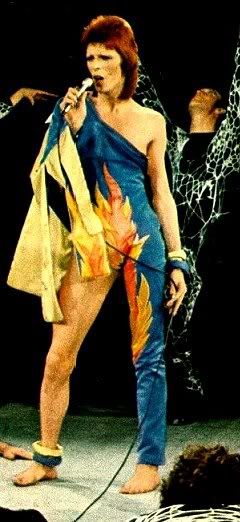
It’s easy to draw parallels from Gaga to other pop stars such as David Bowie, Madonna, and the late King of Pop. Indeed, Lady herself connects those dots. Some could even claim that she a a gothic Christina Aguilera of the era when she was singing songs like “Fighter” and making music videos of boys’ kissing. Despite Lady’s professions of raw originality, however, her image is merely a glossy amalgam of her own pop idols. Outrageous fashions and the quirky appeal to the marginalized of early Ziggy-era Bowie, unabashed bad-girl sexuality and proto-feminism of Madonna, and the slick production, coordinated dance moves, and seamless choreography of MJ, are all fused together in a girl who can actually sing, produced by people who are thoroughly schooled in pop psychology, and dispensed to the masses radio single after radio single. A grueling tour of live shows, in themselves grandiose productions not un-derserving of a Tony Award, support her recent album, The Fame Monster. She proudly proclaims that she lives for the show, that she revels in the glitter and drama and sound of it.

For Lady Gaga, fashion and music are one and the same. She has said that she writes songs based on an image of an outfit she has in her head; her songs are an excuse to wear something outrageous on stage. Each of her music videos feature her in no less than five outfits, and her taste in dress ranges from avant-garde pop diva to back alley prostitute to haute couture fashion model. Nothing is off limits, from a faux-nostalgic 1950’s dress to her monster ball outfit evoking the image on anime princess, or even a bra that spits sparks, if it fits her vision for art, she wears it. Makeup, outfit, props; the whole shebang is planned and executed in style.

While this is all grand and exciting, I can’t help but wonder what the overarching goal is. Especially in light of her newest single, “Bad Romance,” I have an uneasy feeling about where her career is headed. There is an inherent danger in living just for the show and soaking up the pleasures of a hedonic lifestyle; if you go and paint the town red, you will eventually run out of paint. As much as Gaga admires Bowie and his artistry, Bowie now is a far cry from the Bowie of the Ziggy, Thin White Duke, or “Let’s Dance” fame. He ran out of steam by the eighties and nearly crashed, resulting in him toning down his pop star image. If Lady Gaga thinks she can have all of the fun and none of the consequences, she needs to think again, because as it stands now, I see three possible directions that her career could go.

First, and least interesting, is that, despite her claims, that she is merely a cultivated pop icon whose script is written by record labels, no different from Ms. Spears. This would be incredibly disappointing for her fanbase, and detract a great deal from her ‘raw’ image.

Much more interesting and, in my opinion, necessary for the survival of her music career, is if Ms. Germanotta played Lady Gaga like Bowie played Ziggy; a pop act, no doubt, but an act that arrived, gained fame, and then left. Ziggy was a monstrous success - one that would probably have destroyed Bowie’s career should he have continued to play him. Bowie no doubt lost some fans because of the move, as would Ms. Stefani, but considering the alternative, I think it would be a wise move.

Equally interesting but decidedly hopeless is the possibility that Lady Gaga is all there is. I say ‘hopeless’ because, as I see it, her current persona - exemplified by the lyrics of (celebrating an emotionally parasitical and mentally unstable relationships) and accompanying video to “Bad Romance” - as unsustainable. That video (and other videos like it) is not the work of someone who is opening up new creative avenues; it is the aestheticization of a pop star’s destruction. Lady Gaga got the fame she wanted - the question is how long can she hold onto it? And if she does hold onto it, in which new, exciting direction will she take it?


_DZ


submit to reddit

1.12.2010

If you understand this sentence, sasuga

A recent blog post by jibtv blogger Anna Kunnecke got me thinking about uniquely Japanese words. Her deconstruction of the word bimyou highlights what is so hard about the Japanese language - that is is full of words that represent abstract ideas. Bimyou is definable, but depending on the context will mean different things. Anna has already written about that word, so I will turn my attention to a different word: sasuga.

Sasuga is one of those words that Japanese ex-pats love to drop when talking with other ex-pats. (One of them even uses it as a clever title for his blog.) It can be an adjective or an adverb, and is defined something along the lines of “clever, adept, good, expectations, as one would expect.” Example dialog: “Did you just see what Gary did!? He climbed that 50-foot fence using only his arms!” “Ooh! Sasuga Gary!”

This use of sasuga would be appropriate if Gary had a penchant for climbing things with only his arms, but had never attempted something as tall as 50 feet. You would expect Gary to top his old record.

Sasuga also carries the connotation that you would not expect anything less of a person, and in this context can be used to create a humorous situation out of a decidedly maladroit action. If you already expected someone to screw up, uttering a sarcastic "Sasuga!" when they do something like this is appropriate.

It’s this dichotomy that makes sasuga a joy to utter and a bane to hear, because the the word can either be praising or belittling, with no audible difference in intonation. You just don’t know. You don’t know if your friend is praising you or veiledly saying, “Surprise surprise, you lived up to what we thought you could do.”

In this way sasuga is brothers (or sisters, if you prefer) with the term atarimae, which means ‘expected’, ‘reasonable’ or ‘blatantly obvious.’ In Tokyo, for instance, it is atarimae that the trains run on time. Knowing the connotations of atarimae is extremely helpful, because if someone does something that is atarimae only to receive a reply of “sasuga,” then it is likely a sarcastic comment.

All this to say that when a foreigner new to the country hears the phrase “sasuga gaijin(foreigner),” they have no way of knowing whether or not it is a complement, because they have not yet learned what is atarimae and what is not. It’s one of those things you have to, as Anna says, take as a quicksilver-kind of word and go with the flow until you can determine the context. And if you figure out the context more quickly than your other gaijin friends, then I have one thing to say.

Sasuga!


_DZ


Dann writes from his home in snowy Minnesota, where sasuga is the correct response to -15F weather.


submit to reddit

1.03.2010

My Top Six Albums Going Into 2010


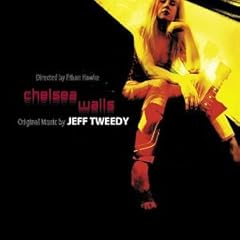
Chelsea Walls Soundtrack - Jeff Tweedy

I bought this CD over two years ago for ¥100 in Tokyo only because it had the words “Jeff Tweedy” on the side of it. I have still never seen the movie it was made for, nor do I own any Wilco albums. Nonetheless, this album is very enjoyable to listen to, with its mostly-instrumental lineup punctuated by poignant songs. Highlights include Jimmy Scott’s cover of Lennon’s “Jealous Guy” and Robert Sean Leonard’s contribution on “The Lonely 1”. Overall a very relaxing album to put on after a long day.


Electric Tears - Buckethead

After an initial listen I discarded this instrumental album as uninteresting and unworthy of Buckethead. After I let it sit on my shelf for a while I gave it another chance. Color me impressed! The whole album has almost no accompaniment, with Buckethead instead choosing to layer acoustic and electric guitar tracks to create a hollow and dreamy soundscape which he then fills with peaceful melodies and gentle guitar noodling. Standout tracks are “All in the Waiting”, “Mustang”, “Witches on the Hearth”, and “Kansas Storm”.


Everything That Happens Will Happen Today - David Byrne and Brian Eno

Prompted to buy the album by the hit single “Strange Overtones”, this was one of the my favorite albums of the year. It sounds like it belongs in the 80s, back when Byrne and Eno were making ...Bush of Ghosts. (Not being able to buy that album this year might drive me nuts.) The song-writing is top-notch throughout, as is Byrne’s tone and Eno’s sonic atmospheres. Best of all, this doesn’t sound like two guys collaborating because they know that anything with their name on it will sell. It sounds fresh; like they're exploring new avenues. These guys have worked together for close to twenty years, and are still able to produce a fun album like this. Go them.


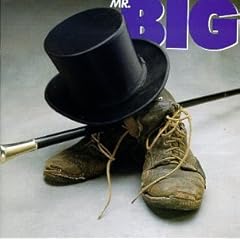
Mr Big - Mr Big

This might be the only album I bought because of the bassist. After hearing Billy Sheehan’s work on David Lee Roth’s Eat’em and Smile, I wanted more bass. I own all four of Mr. Big’s albums, but this one still stands out, mainly because of the top-notch musicianship of Sheehan and guitarist Paul Gilbert. Their hallmark song, “Addicted To That Rush,” is four-and-a-half minutes of them trading solos and trying to out-shred each other. Overall, the songwriting is unremarkable, with popular themes being sex, partying, adolescent irresponsibility, dramatic heartbreak. Gilbert’s tone is flawless throughout, particularly during the solos of “Had Enough” and “Anything For You”, where it is nearly tear-jerking because, unlike his contemporaries, he chooses meaningful phrasing over trying to cram as many sixteenth-notes into a measure as possible.


Tales of the Inexpressible - Shpongle

Psytrance affectionado Shpongle’s sophomore effort, coming after their already-impressive debut Are You Shpongled?, is one of the best $5 AmazonMP3 deals I have bought. It’s trippy, it’s catchy, it’s playful, and, dare I say, it’s even more organic electronica than anything Infected Mushroom can produce. Granted, IM makes faster paced music that takes you with it, while Shpongle are more interested in creating engrossing electronic worlds for your mind to explore. Some might say that this makes Shpongle less focused, but I don’t think so. This whole album is a seamless experience, perhaps best described by a snippet of the lyrics from the “StarShpongled Banner”:

I am a shaman, magician
The sun is purple
3D dimensions
I am for mental extensions.

Ki - The Devin Townsend Project

Ki is the start of a new era for Townsend, as he, in his own words, “has stopped drinking and stopped smoking marijuana.” His previous work, notably with extreme hate-metal band Strapping Young Lad, was offset by the much more mellow Devin Townsend Band albums, one of which I reviewed last year. The two projects showed very different sides of Devin, perhaps rightly, as he had been diagnosed bipolar. SYL was, what Devin callled, “happens when someone who is predisposed to mental illness takes steady amounts of mind-altering drugs.” Devin has since has a life-changing experience, and hence the DTP and Ki. Devin is a man who makes half-albums, and by that I mean his albums are a seamless experience for half of the record. On Infinity it was the first five tracks, on Ocean Machine/Biomech it was the last half of the album, while on Terria various tracks are crafted around and link back to the nine-plus-minute long epic “Earth day.” Ki more or less follows the pattern, though the album follows more of a sensory-experience-type of curve, building with the first six tracks to the holistic set of tracks eight through eleven, with the final two tracks being a comedown. The climactic title track, clocking in at over seven minutes long, is a microcosm of the album, building layer upon layer of sound until the music explodes in all its glory (Devin’s operatic voice does the honors).


_DZ


submit to reddit

1.02.2010

2010: Goals for the New Year

Not buy any new music (really this time!)

Not drive my car (this should be interesting)

Study the works of Marcus Aurelius, David Thoreau, and Thomas Hobbes

Ride my bikes like crazy

Spend at least one hour a week in meditation (Thursday, perhaps)

Write a novel (50,000 words), or at least half of one.

Study the Biblical books of Philippians, Ecclesiastes, and John

No plans for the blog this year, as I want to be able to dedicate more time to writing on paper with a pen. I also plan to spend less time on the computer in general; hopefully Sunday-Tuesday can be computer-less days, or at least internet-less.

We’ll see what the year holds.

Ready, go!

_DZ


submit to reddit

1.01.2010

New Music to Listen to in 2010!

A year ago I made a list of music I wanted to listen to more in 2009.

Fortissimo - Virgin Black
1.Outside - David Bowie
Audentity - Klaus Schulze
Mirage - Klaus Schulze
Mistaken Identity - Vernon Reid
Zen Arcade - Hüsker Dü
Wired - Jeff Beck
Real Illusions: Reflections - Steve Vai
Mothership Connection - Parliament


Two of those albums (Mothership Connection and 1.Outside) I didn't listen to as much as I would have liked. That will change this year.

Others, like Audentity, Mirage, and Zen Arcade I really, really enjoyed.

Time to do it again! The list of CD's to listen more to this year is as follows!

Front End Lifter - Yohimbe Brothers
1. Outside - David Bowie
Mothership Connection - Parliament
Terria - Devin Townsend
Goldberg Variations - Bach
Better Living Through Chemistry - Fatboy Slim
In Rainbows - Radiohead
Moving Pictures -Rush

To add to that I expect to spend a month listening only listening to David Bowie. I have thirteen of his albums, so it shouldn't really be that hard.

Also, I plan to be able to recognize each of Beethoven's symphonies by ear by the end of the year. This might be harder than I think. I really want to listen to more classical music in general, so maybe this will be a good start.

_DZ


submit to reddit

12.31.2009

2009: A Wrap-up of Goals Met and Also Those I Failed To Meet

So, another year has passed. What a trip! Last year I posted this post detailing my goals for the year. Let's see how I did!

Read at least 20 new books

For your viewing pleasure, I present the entire list of books that I have read this year. The list is 59 books long.

*denotes re-read
- most enjoyable reads in bold

MediaMaking - Grossberg, Wartella, and Whitney
Paradox of Choice - Barry Schwartz
High-Tech Heretic - Clifford Stoll
A Quick Guide to Analogue Synthesis - Ian Waugh
Issues in Advertising - Edited by David G. Tucek
Red Dragon - Thomas Harris
All Consuming Images - Stuart Ewen
Model - Michael Gross
Blink - Malcolm Gladwell
Finally Alive - Dr. John Piper
Renegade Kids, Suburban Outlaws - Wayne S. Wooden
The Faces of Homelessness - Marjore Hope and James Young
Killing Yourself to Live - Chuck Klosterman
Brave New World - Aldous Huxley
Fool’s Gold - Andrew B. Schmookler
The Wisdom Of Crowds - James Surowiecki
The Tipping Point - Malcolm Gladwell
Fast Food Nation - Eric Schlosser
The Communist Manifesto - Marx & Engels
Culture Of Complaint - Robert Hughes
Sex, Drugs, and Cocoa Puffs - Chuck Klosterman
Ideas of the Great Philosophers - William Sahakian
Principles of Biomedical Ethics - Beauchamp and Childress
Bowling Alone - Robert D. Putnam
Blue Like Jazz - Donald Miller*
The Communications Revolution - George N. Gordon
The Myth of a Christian Religion - Greg Boyd
Mere Christianity - C.S. Lewis
Trapped in the Net - Gene I. Rochlin
The Internet Church - Walter P. Wilson
The Passion of Jesus Christ - Dr. John Piper
A Spot of Bother - Mark Haddon
Wild At Heart - John Eldredge
Scribal Culture and the Making of the Hebrew Bible - Karl Van Der Toorn
Generation Ecstasy - Simon Reynolds*
Don’t Waste Your Life - Dr. John Piper*
Fargo Rock City - Chuck Klosterman
The McDonaldization of Society - George Ritzer
Nickel and Dimed - Barbara Ehrenreich
The Two-Income Trap - Elizabeth Warren and Amelia Warren Tyagi
Chaos - James Gleick
Joy at the End of the Tether - Douglas WIlson
Culture Jam - Kalle Lasn
Nonviolence in Theory and Practice - Edited by Robert L. Holmes
Semantics - Sidney Shanker
Toxic Psychiatry - Peter R. Breggin
Lives of Master Swordsmen - Makoto Sugawara*
There Are No Children Here - Alex Kotlowitz
Winning PR in the Wired World - Don Middleberg
Being Digital - Nicholas Negroponte
Notes From a Small Island - Bill Bryson
Experiencing Poverty - D.Stanley Eitzen
The Death of Common Sense - Philip K. Howard
Hannibal Rising - Thomas Harris
Technopoly - Neil Postman*
The Grapes of Wrath - John Steinbeck
Jurassic Park - Michael Crichton*
This Momentary Marriage - Dr. John Piper*
Code of the Samurai - Thomas Cleary


If you are really interested, you can go through my blog posts over the last year and make rough correlations from certain posts to what I was reading at the time. I doubt you will have time to do this. I don't even have time to do this.

Read through the Bible in a year

Completed on 12/27/09! This was a really rewarding experience. Some books, like the prophets, dragged on a bit (I'm looking at you, Isaiah.) Others, like Genesis, still gave me new perspectives on stories I had read dozens of times before.

Not buy any new music

My iTunes tells me that I have added 612 new tracks to my library since 12/31/08. Some of these were gifts, but most were not. FAIL! I did get some really good stuff, though. Some highlights are:
  • Ki - Devin Townsend
  • Fire In Our Throats Will Beckon The Thaw - Pelican
  • You've Come a Long Way Baby - Fatboy Slim
  • Everything That Happens Will Happen Today - David Byrne and Brian Eno
  • Silence Followed by a Deafening Roar - Paul Gilbert
  • Equinoxe - Jean Michel Jarre
  • The Man Who Sold The World - David Bowie

Double my blogs posts to 174

The side bar on your right will tell you how I did. Pretty sucky, I guess. Well, 132 is 75% of 174, so I get a C- on that one. But at least I didn't blogspam. I wrote when I felt like it and didn't when I was busy. A big part of my falling short is that I developed a serious interest in cycling over the summer, and spent most of my free time doing that. Looking back, some of my favorite posts from the year:


Memorize a list of logical fallacies

My hard drive crashed during the year, and I lost my web bookmarks. On top of that, I forgot all about this one. So, maybe a 50%.

Produce a piece of ambient music that I like

I got close, I think. But I gave my keyboard back to my parents in June, and haven't touched ambient music since then. A large part of that is lack of interest. After reading Outliers I realized that if I truly want to be good at something, I have to dedicate a LOT of time to it. I decided that making music wasn't something I wanted to pursue even fractionally.

Give away five Macs

This flat out did not happen. The reason for this is that after reading Cliff Stoll's criticisms of computer technology, I realized that kids don't need help being exposed to computers. They can learn to use them well on their own. Hence, this post about computer education. And this one. I did, however, supply three (or four :-( ) people with bicycles, which I am happy about.


What a year! I feel that I learned and grew a lot as a person, and am excited to see what this year will hold. Last year I didn't know I enjoyed cycling so much; what will I learn this year!?


_DZ


submit to reddit

12.21.2009

Rate This, Quantify That: Last.Fm and Cyclocomputers

Some of you may be familiar with Last.Fm, the music tracking portal that keeps a record of your musical tastes and recommends you new music. It also offers a downloadable program that plugs into your iTunes and allows you to see, in detail, the breakdown of your music listening habits. This data can be shared, so your friends can know what you have been listening to as of late. Tracking listening habits? Sharing data? I realize that this has all the making of a follow-up article to this post critiquing iTunes, but it is not. This one has to do with quantifying experience, and how that quantification is commonly seen as an end rather then a means.

I used Last.Fm regularly until this summer, generating just short of two years’ worth of data. The top thirty or so of my most reguarly-played artists are in the following chart. If I never told you before that I liked David Bowie, well, now you know.

(click to enlarge)


Everything I played on my iTunes and iPod was tracked, which I thought was going to be exciting, until I realized that tracking what I listened to became more important than actually listening to it. I had some music on both my G4 and my Quicksilver G4, yet I rarely ever used those machines as jukeboxes because they were not online. If the music I listened to wasn’t recorded (pardon the pun) somehow, I effectively perceived it as having never been listened to. What mattered was what was in the dataset. This is significant because we as a society tend to worship data.

Excessive quantification, meaning the quantification of things that cannot or should not be quantified, is a sign of over-reliance on technology. What Last.Fm did for me was not just keep track of what I listened to, but rather provided a way for me to, quantifiably, show that I loved certain artists more than others. That I like Joe Satriani’s music more than Steve Vai’s is obvious, not just because I have eight of Satch’s CDs to Vai’s three, but because Vai is trailing Satch by 288 “points.”

The thing is, I don’t need a computer to tell me that I listen to more Satch than Vai. I already know! I was the one listening! Moreover, the computer can be misleading by showing that I “like” Yngwie Malmsteen more than I do Jason Becker, which is undeniably false. Malmsteen only has more “points” because I’ve been listening to the four CDs (pared down from like eight or nine) I have of his since right out of high school. I bought Becker’s Perpetual Burn a year-and-a-half ago, and it’s brilliant. (The same can be said of my enjoyment of Jean-Michel Jarre, whose 125 plays all came from the only album of his I have; Oxygène.)

But I am straying from my main point, which is that data is something to be used. I recently started budgeting. I have a spreadsheet with a bunch of numbers on it that tells me how much money I have spent and how much I have saved and how much I will likely use next month. To keep a budget simply because you enjoy entering and manipulating numbers would be a strange hobby indeed. I collect data for something else, not just for the sake of collecting it.

One of my hobbies, cycling, is rife with the quantification of performance. Maximum output, generated wattage, drag coefficient, gear ratio, cadence, distance travelled: these are all data points that help a cyclist measure how well his or her body is performing. So many recreational cyclists get all caught up in measuring this stuff, but for what? For whom is this data important? For professionals, who need to get the most out of their body and bike. As a recreational cyclist, I ask myself, Is this important? Does distance matter if I enjoy my ride? If I am miserable, yet in my moments of extreme discomfort happen to generate the most power, will that be good for my psyche? What really matters? What matters is that I get exercise and have fun at the same time - otherwise I risk ending up like this guy.


The omnipotency of data is so prevalent is our society that we seldom question it. After all, data and information make things efficient, and who doesn’t want to be efficient? That depends on who you ask. Ask Socrates, and you’ll hear that efficiency is a problem for the common man, for the peasants and slaves. Trimming things down so that they require less thought is not a pursuit for the philosopher. Ask a man riding the Giro d’Italia, and he’ll tell you that it is everything.

Pro cyclists aside, we must ask, Does efficiency make us more human? Does reducing performance to numbers, eliminating uncertainty, and quantifying experience lead to more caring, sensitive human beings? Does the ability to direct your friends inquiry to a Last.fm list make for more conversation, or less.

And what’s result in comparing music lists? Do we not start to judge who is the “better” music fan, or who is the most avid listener of a preferred band? Are we more content afterwards, or less? Quantification leads to comparison, and comparison breeds resentment. After all, machines are made equal. Humans are not.

I want to listen to music to hear Klaus Schulze’s (at #2) brilliance, and I want to cycle because the wind feels good as it rushes by. I want to bask in custom synth textures and make wild guesses at my speed as I go downhill. What I don’t need, or want, is a sheet to keep track of playcounts or a fancy-schmancy cyclocomputer. Humanity, I feel, is better off without them.


_DZ


submit to reddit