Showing posts with label food. Show all posts

7.22.2010

Trash Messenger Bags FTW!

One of the drawbacks of using a bicycle for everything is that I can only buy as much groceries as I can haul on a bike, which means that I have to re-stock at regular weekly intervals. That’s actually just a really pretentious way of saying that I go grocery shopping once a week. Today was one of those days, based on my observations of lack of food in my pantry/kitchen. I decided that I had about $50 to spend on groceries this trip, so the next step was deciding where to go shopping for food. The obvious answer that requires the least physical effort on my part is to go to Whole Foods, because fifty (whole) dollars worth of (whole) food can be hauled in this:

But the obvious answer is not always the economically viable answer, so I then thought “Aha! ALDI!” This option was short-lived, because hauling $50 worth of food from that store would require me to rent this:


I don't have a CDL, so I decided to choose the happy medium and go to Cub Foods, which is where I was going to go anyway before I considered other options. I usually take my grocery/utility bike with baskets on it when I go grocery shopping, but since I recently bought a Trash Messenger Bag I decided to do what everyone does with a messenger bag - fill it with stupid amounts of stuff. So I hopped on my normal bike with no baskets and went late-night grocery shopping at Cub.

Twenty minutes and fifty pounds of food later I was riding my bike home, experiencing what it would feel like for a dude with a 50lb beer gut to ride my saddle. After making a mental note to be considerate of others, I turned my attention to my vertebrae, who were all yelling at me at a volume I hadn’t heard since that one time in a high school wrestling meet when I got lifted up and dropped and pinned by a south-Asian Arnold Schwarzenegger. My back reminded me there is a reason why people buy cargo bikes in favor of large bags. Also, the print-out that came with my bag now made more sense:

I did make it home safely, however, and for your viewing pleasure (and Trash Bag promotion) decided to take a few pictures of just how much stuff you can fit in these top-quality bags. The craftsmanship is superb, the bag is really comfortable across your shoulder, and Andy, the CEO/President/sweatshop employee of Trash Bags, is a really great guy to work with. Feel free to check out the website while I go and reserve a massage and make sure that my fridge is well-stocked for the coming week.


_DZ

6.20.2009

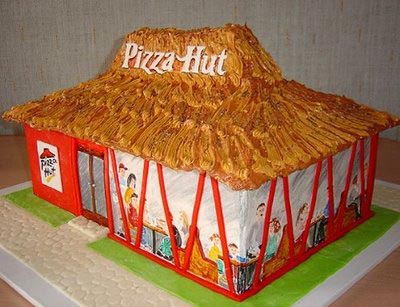
"The Hut", aka Pizza Hut, Is Now On Twitter!

It appears that Pizza Hut, in a bid to become hip-and-also-fresh, has opted to start some stores under the moniker of "The Hut."

Simply "The Hut."

Really, Pizza Hut? Was "pizza" too hard to remember for some folks? Won't this cause confusion among people who own actual huts?


But that's not the only questionable news. It turns out that Pizza Hut, back in April, started employing people whose job it is to update the public, via Twitter, on specials and deals at Pizza Huts. Pizza Hut calls these people "Twinterns", a name so demoralizing that it caused me to backwash some of my vanilla pudding. Bloop bloop bloop!

What's next? Twalesman? Twecretaries? Twactors?


'Cuz I don't know if I can handle a tractor that tweets.


::Bonus Question of the Day:: How would you describe your job position, say, on a resume, as a twintern in such a way so you could avoid using the actual term?


_DZ


submit to reddit

1.21.2009

Constructing A Diabetic Diet on The Cheap

Having Type 1 diabetes means that, not only does my pancreas hate me, but that I have to eat a little differently from most people. Being poor means that I have to shop differently than most people. How, then, do I unify these two situations? How have I learned to deal with my condition and yet still be healthy and also stay within my budget? Well, read on!

Every time I go to the supermarket I have to be selective in what I buy, for three reasons. First, what I eat translates directly to how much insulin I have to use. Since I have to pay for insulin, what kind of food I buy directly affects how much money I spend on medication. I want to spend as little money on medication as possible, so I have to watch what I buy. Carbohydrates(complex sugars) are the main thing that I take into consideration when buying food. The less carbs the better. Secondly, I have to consider what I can afford. Some foods might be healthier (i.e. require less insulin) than others, but if they are really expensive, I haven’t really saved any money. Third, I have to buy stuff that I like and that will fill me up. Sure, eggs and veggies are good for me, but my entire diet cannot consist of just those. I have to have a well-rounded diet.

So, what then do I eat? Here are some of the foods in my diet.

• Rice. My parents were gracious enough to give me a rice cooker, and rice is a staple in my diet. It is rather high in carbohydrates, but it is so versatile as a food that I prefer it over other high-carb foods such as pasta, potatoes and bread.
• Eggs. I go through at least a dozen eggs a week. I go to Target or Cub and buy eggs by the two-and-a-half-dozen. Eggs are great because I can fry them, scramble them, mix them with cheese or salsa, and eat them raw over rice. Eggs have next to no carbs, so I can throw down as many as I want. A five-egg omelet for breakfast is not uncommon.
• Bread. I buy one type of bread - Country Hearth Cracked Wheat. At 15g of carbs per slice, it is the healthiest bread I could find. On top of that, it is cheap and tastes pretty good.
• Cereal. I buy boring cereal like Cheerios, Rice Chex, Honey Bunches of Oats, or SpecialK. Once you start eating these cereals exclusively, the they start to taste really good and even make other cereals that have sugar taste way too sweet. I am a fan of granola, but granola typically has over 40g of carbs per serving, while the cereals mentioned about have less than 23g per serving.
• Milk. I buy whole milk because I don’t enjoy my milk tasting like water. Whole milk doesn’t have any more carbs than 2% or skim(gross), and like all milk can be used for pouring over cereal and mixing with eggs.
• Canned Soup. Chicken noodle soup (or some variant) is always stocked in my cupboard. It only has 9g of carbs per can, so I usually have a bowl of soup for lunch. Also, chicken noodle soup is so healthy that it is routinely eaten by sick people. I’m not sick, so it should be really good for me!
• Cottage Cheese. At a mere 5g carbs in a serving, this is another healthy food that fills me up.
• Yogurt. I buy Dannon plain yogurt, because boring, plain yogurt has half the carbs (about 12) per serving of any flavored yogurt. Five packets of Splenda make 32oz. plain yogurt deliciously yummy.
• Carrots, bananas, and apples. I eat all of these plain, to get my servings of fruits and vegetables. I buy carrots by the bag, and just pull one out and start crunching on it when I want some veggie goodness. Bananas are awesome because not only can I eat them plain, but I can cut them up in cereal or slice them for a peanut-butter-banana-sandwich.
• Crystal Light. I used to drink this stuff all the time, until I found out that not only was the generic Target equivalent cheaper, but also tasted way better. I make it by the gallon in empty milk jugs, and sometimes drink over a half-gallon of it a day.


Other things I buy to eat: Canned tuna, orange juice, soy sauce, shredded cheese, sliced cheese (mozzarella), butter, peanut butter, sugar-free jelly, instant ramen(high in carbs but tasty), macaroni, fresh shiitake mushrooms(not cheap but very tasty), canned peas and green beans, peanuts, bacon.

That is pretty my whole grocery list, which equals out to about $150 a month for food. I eat well, stay healthy, and save money, all at the same time! You’ll notice that apart from the bacon, i eat very little meat. This has nothing to do with me not liking meat and everything to do with a) the price of meat and b) the fact that more greenhouse gasses are emitted by the met industry from the raising, slaughtering, producing, and transporting of meat than from all the cars in the US combined.


_DZ


submit to reddit

1.13.2009

The Combini and Filling Station as Unique Aspects of Culture

When was the last time you wanted a snack or a drink really suddenly, or forgot you needed an extra pack of cigarettes? What did you do? Chances are, if you were in the neighborhood of a convenient store, you drove or walked over there to get what you needed. Once inside, maybe you realized you needed some other things too, like milk, bread, or cough drops. You bought the items, and walked outside. Now, if you had driven there, you might decide that you also needed some gas, and took the opportunity to fill up. You have just had a uniquely suburban American experience.

Because the expansion of the suburban US was based around the automobile and, subsequently, the highway, gas stations and convenient stores have mostly evolved as one and the same. It seems natural to be able to stop by the gas station on the way home if you suddenly realize you need bread or some other grocery item. The separation of the convenient store and the gas station is seen only in very urban areas, at least in America. In other cultures, in this case I will highlight Japanese culture, it is not always the case.


Take a look at this picture. This is a Casey’s General Store, a chain prevalent in the upper midwest United States despite its name being best said in a Southern drawl. It is in a suburban neighborhood, as evident by the houses around it. It is not stranded on some highway exit oasis. It has a few gas pumps, and inside you will likely find fresh pots of coffee, donuts, coolers full of soda pop, bags of chips, and beef jerky, among many other things. The store will probably stock some basic automotive items, such as motor oil and air fresheners, and along one window will be a magazine rack, filled with glossy periodicals. Behind the counter you will also probably find cigarettes and in the back cooler, depending on the state, there will be alcohol. In short, it seems to be a typical American convenient store. I imagine that the store follows the formula typical of just about any so-called “convenient store” around the globe. But why the gas pumps? Why is shopping for goods and gassing your car associated with one another? Because of America’s fondness for the automobile and the prevalence of it in the expansion of suburban American life across the continent.

Japan is a nation that loves its cars. They are very good at making them, as evidenced by the availability of Mazdas, Toyotas, Hondas, and Nissans, etc, all around the world. But cars came to Japan after the country was already entirely settled. Cars were a luxury; a way of getting from Point A to Point B more quickly as opposed to exploring a brand-new Point C. As such, the homogeneity that convenient stores have with gas station in the US did not play out the same way as it did in Japan. Indeed, convenient stores and gas station in japan are two entirely separate businesses. Popular convenient store, or combini, brands in Japan such as 7-Eleven, Lawson, FamilyMart, AM/PM, Sunkus and MiniStop have nothing to with selling gasoline, instead leaving that to well-known petrol brands such as Shell, Jomo, Esso, Eneos, and Cosmo. These filling stations almost always have garages and car-washes attached to them as well. They are also the hubs of the local automotive culture. Hot-rodders congregate at the local gas stations late at night, admiring one anothers’ cars, and full-service attendants will pump your gas, wash your windows, and empty your cars ashtray with a smile. A Japanese gas station will occasionally have a restroom or vending machine inside, but not much else. Certainly not food.

Combinis, on the other hand, are always stocked with a wealth of foods, drinks (both hard and soft), cigarettes, magazines, and household items. Most will even stock toys and video games and will let you pay your cellphone and utility bills! These goods and services are almost never found in American convenient stores. There are a few other notable differences as well.

Combinis do not have fountain drinks. This is indicative of Japan in general, actually, where free-refill-type fountain drinks are rarely found.
• Also related to drinks, combinis do not have fresh coffee. Japan seems to have cornered the market on canned coffee (though the legitimacy of actual competition in this market is debatable), and most coffee in Japan is thus sold in a can.
• Japan in general is not a big consumer of beef jerky. While in any American gas station one can be expected to be confronted with a wall of dried beef as soon as they enter the store, this is not the case in a combini.
• Apart from a delicious dish called oden, very little food in a combini is what Americans would consider “fresh”. While it’s true that most food in a combini is encased in plastic, it does taste surprisingly fresh once removed and eaten. I attribute this to the ease of transport across Japan (though I mean mainly Tokyo and other cities here). Food is able to to be moved quickly, allowing for fresher food on the combini shelves. It is wrapped in plastic because, well, let’s face it, nearly everything in Japan comes wrapped in plastic.
• Lottery is handled by a separate system in Japan, and combinis do not sell lotto tickets.
• Despite having bottled soft drinks in the store, most combinis will have vending machines right outside the door selling the exact same things! Not only do Japanese vending machines sell drinks, but also tobacco and alcohol as well. It is truly curious to see vending machines right outside of the stores.

While it s no secret that frameworks of commerce in countries reflect the lifestyles of its people, I find it really interesting to compare the cultural differences evident when contrasting the American filling station and convenient store with the Japanese combini and gas station. Japan clearly was a nation where the combini came first and cemented itself as the go-to spot for spur-of-the-moment groceries and other goods, while the gas stations sprung up later to cater solely to the automotive needs and demands of a growing economy. In America, however, the growth was synergic, resulting is brands like BP, Casey’s General Store, WaWa, and Texaco that have a good deal of food and home products for the man or woman on the go. Such contrasts are beautiful examples of diversity in this increasingly connected world, and should be enjoyed and treasured.


_DZ


submit to reddit