1.08.2015

The Inevitability of the Fifty Shades of Grey Movie

(via IMDB)

As the Fifty Shades... movie is set tempt teenagers everywhere this Valentine's Day, just over a month away, I want to share a passage from a novel I read recently, Michel Houellebecq's Platform, in which the plot revolves around the idea of mainstream European sex tourism to Asia. Here, the main character explains the attractiveness of the scheme, given the state of society nowadays. 

"Offering your body as an object of pleasure, giving pleasure unselfishly: that's what Westerners don't know how to do anymore. They've completely lost the sense of giving. Try as they might, they no longer feel sex as something natural. Not only are they ashamed of their own bodies, which aren't up to porn standards, but for the same reasons they no longer feel truly attached to the body of another. It's impossible to make love without a certain abandon, without accepting, at least temporarily, the state of being in a state of dependency, of weakness. 
"Sentimental adulation and sexual obsession have the same roots, both proceed from some degree of selflessness; it's not a domain in which you can find fulfilment without losing yourself. We have become cold, rational, acutely conscious of our individual existence and our rights; more than anything, we want to avoid alienation and dependence; on top of that we're obsessed with health and hygiene: these are hardly ideal conditions in which to make love. The way things stand, the commercialization of sexuality in [Asia] has become inevitable. Obviously there's S&M too. It's a purely cerebral world with clear-cut rules and a prior contract....Organized S&M with its rules could only exist among a cultured, cerebral people for whom sex has lost all attraction. For everyone else, there's only one possible solution: pornography featuring professionals; and if you want to have real sex, third-world countries."
- Michel Houellebecq, Platform, p.244

Platform was published in 2001, and this year Fifty Shades... is coming to the big screen, meaning that Houellebecq is something of a doomsday prophet. I don't agree with his "only possible solution," obviously, but I think his diagnosis is close to the mark. Unrelated to Platform but still on topic, Pastor Doug Wilson wrote an article a couple years back, when Fifty Shades... was first published, and he summarized the problems of the book like this:

Now someone might want to intervene in these our enlightened times and say that [sado-masochistic relationships] are all a matter of personal choice. Of course, he might hasten to add, bondage and degradation and torture are bad if you are not dealing with volunteers. But if such a course is mutually chosen... well, who's to say and all that? 
The first concern is that if you create a world defined by the excitement of breaking taboos, then how is an insistence upon "mutual agreement" anything but the creation of the final taboo? And if there is no standard outside the mutually-expressed desire to play this game of destroy-the-woman, then there is no standard that will condemn somebody who decides to start playing this game for reals. It is dangerous to play rape in a world with real rape. In short, don't start what you can't finish. 
But the second thing is that people do not arrive at the moment of such an emotional/relational choice with a clean slate. There are many women who accept men into their lives who treat them like dirt (and sure, they technically choose it), but they got to this point because their entire outlook and view of themselves was shaped by fathers who treated them like dirt, or that neighbor boy, or that leering uncle, and they most certainly didn't choose that. So do we seriously want to maintain that kicking a woman when she is down is not a problem provided she has previously been so battered and discouraged that she has stopped trying to get up? Of course not. And the fact that an abuse-prepping catechism like this one clearly appeals to millions of women is grand news for predatory (straight-toothed) men everywhere.
Is this the movie that some teens are going to watch to learn how to kiss+ ? The fact that society will tolerate a (notoriously poorly-written) book trilogy and accompanying movie, and that the producers of said movie once stood before potential financial backers and said, "Yes, we are confident that this movie will make money," is a scary thought.

_DZ submit to reddit

12.30.2014

Highlights from Derek Walcott's Odysseus

I just finished reading Derek Walcott's stage adaptation of Odysseus, that he wrote back in 1990. Here are some highlights.

EURYLOCHUS
Her [Circe] music's pounding with the odours of rutting. 
ODYSSEUS
Perfumes won't dispel it. 
EURYLOCHUS
Her rooms are grunting pens. 
ODYSSEUS
Still, give it to our enchantress, she knows one thing. 
EURYLOCHUS
What? 
ODYSSEUS
That brothels aren't just sailors' dreams, but all men's. 
EURYLOCHUS
Not mine. 
ODYSSEUS
All. 
EURYLOCHUS
Don't yield, sir, you have a wife and son. 
ODYSSEUS
At the back of all men's minds is a rented room.
----
EUMAEUS
Look at these puddles lying like shield in the sun 
ODYSSEUS
Reflecting clouds and phantoms. Our passing travail. 
EUMAEUS
Aye. Our shadows slide over them, and then we're gone. 
ODYSSEUS
The earth is still swaying.

----
ODYSSEUS
For one glimpse of her [Penelope] my heart might lose all reason. 
DEMODOCUS
But why her, man? Is her patience now a legend? 
ODYSSEUS
Because I once held such a woman. And our son. 
DEMODOCUS
There is only one thing that I can compare her to:
She is like a green pine that never sways on its hill, 
Whole leaves repeat the swaying of burly water
Rooted in its cleft, not sea-grape or forked myrtle 
Is as steadfast. Twenty years after Troy's slaughter,
As a green pine will make a castle of herself 
This pine will feed no man's fire with crackling boughs
Or nestle his vows, as other branches, swallows, 
But on her height, in a meadow of cold flowers,
She has weathered a siege even longer than Troy's.
----
ODYSSEUS
O when this racked body slid down astounding seas... 
PENELOPE
When I'd kneel down like an olive, rooted in prayer... 
ODYSSEUS
When the spray blinded me, till I lost faith in tears... 
PENELOPE
When no sail startled the olive tree, year by year. 
ODYSSEUS
The sea still shakes in my body, can you hear it? 
PENELOPE
The sea is quiet and all you trials are done. 
ODYSSEUS
Keep me embayed in your arms, your harboring heart. 
PENELOPE
Take root my pine, my shade, my patience's pardon.

_DZ submit to reddit

10.27.2014

Haha, Haikus


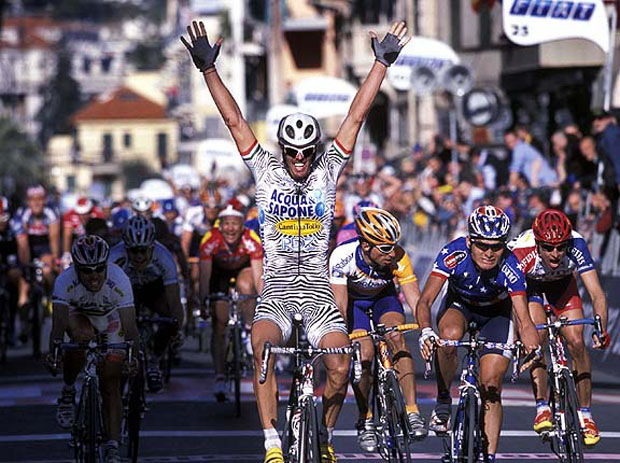
I carry around a notebook with me in which I write down haikus. Most of them are pretty rubbish, but practice does help make them better. I find that, most of the time, I end up in rather whimsical territory, which means that, given the restrained and refined history of the haiku, where poets aim to convey a rich sentiment or experience as elegantly and with as few words possible, my contributions often feel something like a Mario Cipollini skinsuit amidst a peloton of people playing by the rules.

Here are a few from my notebook that I thought I would share with you.

sent from my iPhone
hence may contain some words that
unattended for
A reference to autocorrect shenanigans, obviously.


I wonder if I
can write a poem about
my black-and-white socks
Yes, I can.


softer hands holding
me, hopelessly beautiful
but I never asked
Somebody, somewhere.


we moved away from
solitary apartments
and threadbare towels
Upward mobility!


fat tires revolve
crushed rock harmonizes with
my contented sigh
The joys of riding on crushed limestone trails.


man is appointed
to die once and face judgement
so it goes, he says
Kerouac was hard-hearted?


silvery blue tones
gracious curves on the fretboard
fingers flying up
Devin Townsend used D'Addario strings because they sound "more silver and blue and less.....purple."


hands on a glass door
soft face weeping in sunlight
love stands on the porch 
Somewhere between the paintings of Hopper and Pearlstein.


drip drip drip drip drip
jazz gig in a urinal
thunderous applause
Admittedly juvenile, this one is redeemed by being able to read the first line in whatever meter you want. Jazz, man.


_DZ submit to reddit

10.10.2014

Michel Foucault or Max Ernst?

There have been quite a few times when, while reading a book, I have no idea what I'm actually reading. The prose just doesn't make sense. This usually happens in either books filled with philosophy or art criticism. And so, here I present to you passages of prose, and you have to tell me if the author is writing about Foucault or Ernst. Enjoy.

"The educational folly of grown-ups was no match for the mind of the boy."

Foucault or Ernst?

His work is "a long exploration of transgression, of going beyond social limits, always inseparably linked to knowledge and power."

Foucault or Ernst?

"[He] employs highly specific and identifiable techniques of manipulation and combination. Because his work is the result of conscious thought, and yet allows chance to operate, it possesses a whole variety of meanings."

Foucault or Ernst?

"[In covering the development of his work,] it would be inappropriate in a study of this nature to engage in detailed analyses of individual works."

Foucault or Ernst?

One major work "was not a conventional work of history, making sweeping generalisations without sufficient particular argument, and that [he] clearly 'thinks in allegories.'"

Foucault or Ernst?

"'Shouting, swearing, spewing,' he wrote later, 'gets you nowhere. There's no point either in trying to wrap yourself up in contemplation.'"

Foucault or Ernst?


_DZ submit to reddit

3.17.2014

On Being Sick in England

So these last few days (like 6), I've been sick, which isn't too surprising because everyone gets sick now and again. But this time was different, because this time I'm in England (see below).

Since childhood is the prerequisite for adulthood, and everyone gets sick when they're a kid, most people have the whole "getting sick" thing pretty down to a science. You know what the symptoms are, how you should deal with them, and what "getting better" feels like.

During this whole "childhood" phase, how your parents treat you when you are sick has a big influence on how you cope with sickness. (Duh). This is always a great thing to talk about with international students, because most peoples' stories and methods seem really natural to them and really bizarre to everyone else.

For example, to treat a cold when I was younger, I used to snort salt water through my nose to try and clear my sinuses. It may have worked, but I don't do that anymore. Now I take showers, because covering yourself in hot water is a great way to loosen up mucus (second only to spicy Chinese food). The bonus of showers is that you feel clean and fresh afterwards, instead of the usual clammy-sick-grossness that sets in after 20 hours of being curled up and coughing under multiple blankets.

By the time you "strike out on your own" and go off to college/get a job/pay for your own blankets, you have a pretty good idea of what helps you ward off a cold. I'm positive that a good part of this is the placebo effect or a logical fallacy or both, ("I feel better when this happened, so that must make me better") but some of it is probably backed up by legit science (mainly the "take drugs" part).

I'm all for drugs, but that can be overdone, too. I had a flatmate who was (probably) addicted to NyQuil, and once dated a girl who would take 10-12 Advil or aspirin at a time. She just gobbled up those nummiform tablets like they were Skittles.

So anyway, if my brother or I were ever laid up, my mom would stick to a fairly standard regimen of Foods That Help Fix Colds. This list included:

  • Applesauce (plain - none of that flavored stuff loaded with sugar)
  • Toast
  • Vitamin-C-rich fruits
  • Sprite
  • Orange juice
  • Chicken noodle soup (Campbells) 
  • Jell-O (preferably shaped like NASCAR cars)
  • Plain rice (or flavored rice soup)
  • Cheerios and apple juice (my parents didn't think having dairy when sick was a good idea)

So this is what I learned to eat to fix a cold. Looking back now, it's amazing that my mom could even get most of that stuff over in Japan, yet I never remember a time when I was sick and there was no (fill in the blank). As I got older, some stuff went off the list (toast, Cheerios and apple juice) and some stuff came on (Kosher baby dill pickles, Gatorade/G2). 

Fast-forward to last week, and I'm sick. To deal with it I think I need: drugs, lots of liquids, applesauce, Jell-O, chicken noodle soup, dill pickles, and fresh fruit. What do I discover instead?

--American applesauce doesn't exist here. Seriously. What the Brits call "apple sauce" is basically thick, cold apple pie filling-like jam that you add to pulled pork sandwiches. This is great in its appropriate context, but a poor substitute for proper applesauce, which you can basically drink when you need to and soothes your throat like nothing short of ice cream can.

--The British don't have a very strong Jell-O tradition. Instead what they have is "jelly." Hartley's is a popular brand. Somewhere in sweetness between Jell-O and grape jelly (sandwich spread), it comes in little containers the about size of a double-shot glass. This size is surprisingly OK, because with how sweet it is there is no way that I could pound it down like I do real Jell-O. Don't even try to look for Jell-O molds, either. A huge disappointment.

--Chicken noodle soup seems not to be high on the list either, since the supermarket I shopped in only has two facings of Campbells Cream of Mushroom soup, and no Classic Chicken Noodle (or Double Noodle!). I probably could have looked for some other type of chicken noodle soup, but I'm really suspicious of imitation soup, because one time aliens broke into my house and replaced my Campbells with Cub's/Walmart's/Target's generic stuff (either that or I was poor, which was probably more likely) and I had to deal with that generic garbage soup for one flu session. Who knew that an extra 30-cents-a-can could make that much difference? That experience ranks up there on my list of Worst Soup Experiences Ever. 

--And the pickles! Oh, the pickles. I finally found the pickles on the second-to-bottom shelf of the "Oils, Sauces, and Spices" aisle, and to my dismay there were only four (four!) options: super tiny& sweet, gherkins in sweet vinegar, gherkins in sour vinegar, and sweet sliced hamburger pickles. Really, I wanted none of these. I especially dislike sweet pickles (they offer all the looks of being a good pickle and then disappoint to mightily), so I had to settle for the sour ones. These were another huge disappointment. I can usually eat 1/3 to 1/2 a jar of pickles in a sitting (combine that with any Campbells soup and you have a lunch where sodium levels are through the roof!), so I was expecting to do the same this time with these, but I could barely finish three pickles. Just terrible.
Quality gets worse as you move from right to left
What the British ARE very good at is hydration. The juices are generally good quality, and thanks to a very widespread drinking culture, good-quality mixers are everywhere. I mixed some premium apple juice with fizzy lemon-lime water and the result was amazing! It was like ambrosia for sick people.

(Not pictured: Me, bursting with strength)

There was plenty of fresh fruit to be had as well, and I had my fair share of figs, bananas, and mikans. I also had a glass of wine, which I'm sure took the edge off of...something. Britain has plenty of drugs, too (thanks NHS!), so finding ibuprofen wasn't a problem. 

Getting sick is not great - I don't recommend it. However, as you've probably gathered, I recommend it even less if you're me living in Britain. I think that's the moral that we can all learn here. The other moral is that when child version of you gets sick, make sure your mom rehabilitates you with foods that are available always and everywhere. Bread. Potatoes. Rice. Water. Milk. Grass. Rubber. Bark. Sears catalogs. All the boring stuff that you already (might) eat anyway.  Or you could just never travel. Or you can choose to never get sick. These are all potentially valid options. Meanwhile, while you are considering those options, please ship me crates of kosher baby dill pickles and applesauce. Thanks.


_DZ submit to reddit

11.08.2013

God's Grace is Not a Ferrari

God says that his grace is a free gift, both the one-time act of justification and the continuing sanctification through the Spirit. He also says that His Spirit is like an eternal spring of water, founting inside of us, that provides sustenance for daily life. My interest today is whether we as Christians actually take that to heart in day-to-day activities. Do we think we only need a certain amount of God’s grace on a day to day basis, after which we can manage life on our own?

We use lots of items every day, and some are more useful than others. Economists have a term for how useful something is, called “marginal utility.” Connected to this is the idea of “diminishing marginal utility,” which is what I’m more interested in. Let me explain. Imagine that I offer to give you a Ferrari worth mega dollars, with only one string attached: you cannot sell it or give it away- it stays with you. You like your Ferrari and are very grateful for the gift, driving it around, zooming about the countryside, showing it off. It’s brilliant. You’ve never been happier in your whole life. But what if I offer to give you three more Ferraris, with the same caveat - only you can drive them. Now what do you do? Sure, you like your Ferrari and all, but you can only drive one at a time (already expensive in and of itself), and you can’t sell the extras for money or give them to friends as gifts. What about if I offer to give you seven more cars? Ten more? You wouldn’t know what to do with all of them, and you’d turn my offer down. This is what I mean by diminishing marginal utility. The usefulness of an item (the Ferrari, in this case) diminishes as you acquire more of them. Value of an item is not just limited to what it’s “worth,” but also by your ability to use it.

My concern is that too often I treat God’s grace like an Ferrari: one is really nice, but what would I do with more? A little bit of grace is nice for justification and adoption and one-time occurrences like that, but wouldn’t more grace just complicate things? I can only handle so much on my plate. ‘Me relying on God for strength in daily tasks is one thing, but there’s no need to get too crazy and help lead that church ministry, talk to that person about Jesus, memorize parts of the Bible, or give money to world missions,’ we say. We’re tempted to minimize grace offered for sanctification and growth in Christ, because we only have so much time. It would be God like directing cars to someone who would turn around and stash them in a garage. We’re already plenty busy.

But I think that when God prompts Christians to do something, we need to do it. That inkling feeling (from the Spirit within us) to talk to the new person at church; that recurring thought to send money to your missionary friends in Asia; your wife’s suggestion to invite the new couple across the street over for dinner: these (and myriad others) are all things that God might prompt you to do. You know these are good things, but you say in your heart, “I don’t want to, because what if that goes somewhere? What if that new person wants to talk longer, or the couple across the street wants to come over more often? Where am I going to find the time for that? And what if I need that money for problems in the future?

In a way, this is thinking about the future without God, and there is a problem with that: it disobeys God. Part of loving Him “with all our heart, soul, mind and strength” (Mark 12:30) is using our resources to do what he tells us, when he tells us to do it, because when he tells us to do something, he promises to provide the grace necessary to do it (2 Cor. 12:9). We need to include God as we think through the future, assured that he will act for our eternal good (Rom 8:28) and equip us for the good works that he prepared for us ahead of time (Eph. 2:10).

Grace is not like a Ferrari because grace has no diminishing utility. If God, through the promptings of the Spirit, offers us more grace, we will be able to use that grace for good works. There is no disconnect between how much we have and how much we can use - it won’t just sit in a garage, collecting dust. God didn’t call us to a little bit of life in Him - he called us to abundant life, and so we, in faith, should ask God to give us more than we could ever hope for or imagine so that we receive the privilege of adding to the work of His kingdom. God promises that we will be able to use what he offers us, if only we gladly receive it. So, the next time the Spirit prompts you to do something, step out in faith and receive the empowering grace of God, confident that He will use it for your joy and His glory.

_DZ

8.28.2013

Sheffield: First Impressions


Tuesday morning I arrived in Sheffield, UK, where I will be living for the next year. As soon as I got settled I took the opportunity to walk around town and see the sights. One of the first things I noticed was that, apparently, no one cares if you park on the wrong side of the street!


This is a two-way street.

I think the speed bumps are fairly common here as well. Then, as you walk along the sidewalk, you see these delightful little postboxes.


As well as these phone booths. It's refreshing to see a phone booth that does not have the phone ripped out of the wall. This one takes coins and cards!


I love seeing advertising in the wrong context. Here, for example, if you have a mobile that can snap a picture of a QR code, you're probably not looking for a phone booth.

(I can't wait to find out more about ice cream)

 Another thing I noticed was how the streets were labeled. In Japan they are not really labeled, and in America they are labeled with signposts on the corner. But in Britain, they are labeled either with a proper free-standing sign, like this:


Or with a sign pasted onto the side of a building, like this:


There is no way that any property owner in America would let the city post a permanent street sign on the side of their building. 


_DZ submit to reddit

6.10.2013

A Response to "The Abolition of Sacrifice"


Today, Tyler over at The Supernatural Gospel published a post about the part that sacrifice played in the Old Testament and how the idea of sacrifice should be understood by Christians today as members of the New Covenant of Jesus. His view of sacrifice is negative and summed up in his statement, “...just because something is in the Law doesn’t automatically make it good. Sacrifice is a case in point.” The general narrative of his post tracks sacrifice as something that God created as ”a concession to man’s guilt and bloodlust,” and that “sacrifice under the Old Covenant was to provide an outlet for human violence and to fulfill the human need to feel free of guilt and have a clear conscience.” Basically, ancient man felt guilty sometimes, and to appease that guilt he made sacrifices to deities. God, despite not needing sacrifices, chose to condescend to this base part of human nature and set up a sacrificial system in Israelite culture to give the Israelites a way to assuage their guilt. It was supposed to be a way to let us feel like we are right with God, because God loves us and wants us to be right with him. 

Tyler connects this to the cross by saying that, “[t]he cross didn’t deal with God’s sin consciousness, as if he was hindered from relating with us because of sin. It dealt with our sin consciousness (Hebrews 10:1-3). It doesn’t free God from a need to punish; it frees us from a guilty conscience.” The cross was thus the perfect “liberating device” in showing humanity that they were already in good standing with God. Even when we killed His Son, Jesus, He still loved us. The God portrayed here seems to be a fluffy bundle of love, and the Bible as a history book that keeps pointing us towards that. But is that biblically accurate?

As a fellow Christian, I aim to be gentle in critiquing Tyler’s post. His message that God loves us and sent His Son to die for us (for our benefit) is biblical and glorious. However, I strongly disagree with Tyler's presentation of sacrifice, not just because I think that his biblical exegesis (how he interprets the text) is deficient, but also because his interpretation of the sacrificial significance of the cross, the most pivotal event in human and world history, is biblically off the mark. This post aims to give a more rounded view of the biblical idea of sacrifice, how it relates to God, and how the OT practice of sacrifice is fulfilled in the propitiatory death of Jesus.

First off, let’s avoid a reductionistic view of sacrifice. There are many different types of sacrifices in the OT, including but not limited to, “the burnt offering, the grain offering, the sin offering, the guilt offering, the ordination offering, and the peace offering” (Lev. 7:37).  Not all of these are restitutive; some are for thanksgiving and others are for ceremonial cleanliness. Tyler is right in saying that God doesn’t need our sacrifices (Job 22:2; Ps. 50:8-12; Acts 17: 24-25), but I want to add that God likes them. One of the repeated phrases in Numbers when talking about sacrifices is “an aroma pleasing to the Lord” (15:3, 7, 10, 13-14, 24, 18:17, 28:2, 6, 8, 13, 24, 27, 29:2, 6, 8, 13, 36). When King David prays to thank God for His blessings, he sacrifices “1,000 bulls, 1,000 rams, and 1,000 lambs, with their drink offerings” (1 Chron. 29:21) and blesses the Lord Almighty, along with all Israel. And God likes it. When Solomon dedicates the temple (1Kg. 8), he sacrifices even more animals, and God likes it. So I have trouble with Tyler’s statement that “God never wanted our sacrifices, even under the Old Covenant.” God absolutely wanted our sacrifices: He likes them. So keep in mind that not all sacrifice is atonement for sin.

But some is. When I talk about "sacrifice" now, I am specifically referring to the type that is meant as a payment for sin. Theologians call this "penal substitutionary atonement," and it means that Christ was sacrificed and suffered in our place and absorbed the divine wrath meant for our sins. Human sin is an offense against God and God alone (Ps. 51:4), so much so that the character and nature of God defines what sin is and is not. 

God, as an infinite being, has an infinite number of positive attributes, including infinite wisdom, justice, and holiness. When he says something it comes to pass, and when he moves to act that action is accomplished. When he gives Israel a command or a law (or The Law), it is infinitely pure, perfect, and righteous and any infraction against it is infinitely grievous. In addition, Jesus (Matt. 5:17-18) and David (all of Ps. 119, for starters) both affirm the goodness of the Law, so I have trouble with Tyler’s statement that “just because something is in the Law doesn’t automatically make it good.” Everything that comes from the hand of God is good (Gen 18:25; Ps 71:19). Remember, too, that this is the nation to which God proclaimed: 

“You yourselves have seen what I did to the Egyptians, and how I bore you on eagles' wings and brought you to myself.  Now therefore, if you will indeed obey my voice and keep my covenant, you shall be my treasured possession among all peoples, for all the earth is mine;  and you shall be to me a kingdom of priests and a holy nation” (Ex. 19:4-6).

Sacrifice was a response of gratitude to work that God had both already accomplished and was continuing to perform, namely the choosing of a sinful people to be His holy nation. It was a reminder to the nation of Israel that their sin was terrible; that offending an infinitely holy God is deserving of infinite wrath. Animals had to be killed continually (Num. 28:3) because Israel forgot daily. But God, ever gracious and merciful, was waiting until the time was right to submit Himself to the constraints of time and space, pain and suffering, for the sake of His chosen people.

Tyler is right when he says that the animal sacrifices of the OT were eternally ineffective. The blood of bulls and goats can never take away sin (Heb. 10:4). What God set up as a physical ceremony was supposed to prompt a spiritual softening of the heart and a love for God (1 Sam. 15:22; Prov. 21:3; Isa. 1:11-13, 16, 17; Jer. 7:22, 23; Mic. 6:6-8). It is good, therefore, that animal sacrifice is not the end of the story, but rather a type (an event in history that points forward to a greater reality) of Christ.

Christ’s sacrificial death on the cross is the greatest expression of love in human history (Rom 5:8). 
Christ took the Father’s wrath for us, in our place (1 Jn 2:2, 4:10), and this penal substitutionary atonement is effective in reconciling us to God (2 Cor. 5:18, 19; Col. 1:20). This reconciliation is necessary because we sin and God hates sin, as I have pointed out above. When Tyler says that “[t]he cross didn’t deal with God’s sin consciousness, as if he was hindered from relating with us because of sin,” he is in direct contradiction to what Paul makes very clear in Romans, namely that Christ’s blood sacrifice was necessary in order for God to be just in forbearing former sins (3:25) and our believing in the efficacy (Heb. 10:14) of Christ’s work on the cross saves us from divine wrath (5:9). 

Why is this good news for us? Why should we care that Christ, in living a perfect life and dying a horrific death, proved the Father just and righteous while reconciling us to Himself? Because of who God is - a Being of infinite beauty and creativity and goodness. By nature we hate God (Eph. 2:3, Rom. 3:12) and separate ourselves from the splendor of His beauty, creativity, and goodness. Believing that God will reconcile us to himself with no concern for his own holiness, and that Christ’s death is just a brightly lit billboard showing us that, is a massive undercutting of God’s infinite holiness. Without bloodshed, God would not be infinitely just, and we could not trust Him. Apart from Christ’s death, glorification, and eternal intercession on our behalf (Heb. 7:25), there is an infinitely wide chasm between us and God. The wicked have no part in life with God.

The cross is also the assurance that God is for us. The word sacrifice means “giving up something that is valuable for the sake of other considerations.” If Christ is God (which he is) then He shares in the eternal beauty, justice, love, and holiness of God. So when Paul says in Romans 8:31-32 that, “If God is for us, who can be against us?  He who did not spare his own Son but gave him up for us all, how will he not also with him graciously give us all things?”, he is reminding us that God loved His elect so much that He temporarily subjected His son to the wages of sin, even through Jesus was perfect, to redeem them. I am amazed by the reality that God would do that for a people He chose for Himself.

Christians aim to love God because He first loved us - not the other way around. There is nothing we did to merit that love and favor - it is a gift (Eph. 2:8-9), and there is no sacrifice that we can give to make God love us more. God loves us because He wants to, and the life and death of Christ proves that. The main motivating urge for me to write this was that I believe that Tyler’s presentation of sacrifice and the cross makes that divine gift of love and favor smaller and cheaper. It is like replacing silver with chrome or diamonds with glass. The entire Bible, both Old Testament and New, forms a cohesive story showing not only who God is and what He is like, but also how He works through history to draw a people to Himself. Christ’s sacrifice on the cross should enlarge your heart to love God more abundantly according to His standard of love and not what we as humans think love should be. Sacrifice is part of God's plan throughout history, and we should humbly worship in response.


_DZ submit to reddit