3.17.2014

On Being Sick in England

So these last few days (like 6), I've been sick, which isn't too surprising because everyone gets sick now and again. But this time was different, because this time I'm in England (see below).

Since childhood is the prerequisite for adulthood, and everyone gets sick when they're a kid, most people have the whole "getting sick" thing pretty down to a science. You know what the symptoms are, how you should deal with them, and what "getting better" feels like.

During this whole "childhood" phase, how your parents treat you when you are sick has a big influence on how you cope with sickness. (Duh). This is always a great thing to talk about with international students, because most peoples' stories and methods seem really natural to them and really bizarre to everyone else.

For example, to treat a cold when I was younger, I used to snort salt water through my nose to try and clear my sinuses. It may have worked, but I don't do that anymore. Now I take showers, because covering yourself in hot water is a great way to loosen up mucus (second only to spicy Chinese food). The bonus of showers is that you feel clean and fresh afterwards, instead of the usual clammy-sick-grossness that sets in after 20 hours of being curled up and coughing under multiple blankets.

By the time you "strike out on your own" and go off to college/get a job/pay for your own blankets, you have a pretty good idea of what helps you ward off a cold. I'm positive that a good part of this is the placebo effect or a logical fallacy or both, ("I feel better when this happened, so that must make me better") but some of it is probably backed up by legit science (mainly the "take drugs" part).

I'm all for drugs, but that can be overdone, too. I had a flatmate who was (probably) addicted to NyQuil, and once dated a girl who would take 10-12 Advil or aspirin at a time. She just gobbled up those nummiform tablets like they were Skittles.

So anyway, if my brother or I were ever laid up, my mom would stick to a fairly standard regimen of Foods That Help Fix Colds. This list included:

  • Applesauce (plain - none of that flavored stuff loaded with sugar)
  • Toast
  • Vitamin-C-rich fruits
  • Sprite
  • Orange juice
  • Chicken noodle soup (Campbells) 
  • Jell-O (preferably shaped like NASCAR cars)
  • Plain rice (or flavored rice soup)
  • Cheerios and apple juice (my parents didn't think having dairy when sick was a good idea)

So this is what I learned to eat to fix a cold. Looking back now, it's amazing that my mom could even get most of that stuff over in Japan, yet I never remember a time when I was sick and there was no (fill in the blank). As I got older, some stuff went off the list (toast, Cheerios and apple juice) and some stuff came on (Kosher baby dill pickles, Gatorade/G2). 

Fast-forward to last week, and I'm sick. To deal with it I think I need: drugs, lots of liquids, applesauce, Jell-O, chicken noodle soup, dill pickles, and fresh fruit. What do I discover instead?

--American applesauce doesn't exist here. Seriously. What the Brits call "apple sauce" is basically thick, cold apple pie filling-like jam that you add to pulled pork sandwiches. This is great in its appropriate context, but a poor substitute for proper applesauce, which you can basically drink when you need to and soothes your throat like nothing short of ice cream can.

--The British don't have a very strong Jell-O tradition. Instead what they have is "jelly." Hartley's is a popular brand. Somewhere in sweetness between Jell-O and grape jelly (sandwich spread), it comes in little containers the about size of a double-shot glass. This size is surprisingly OK, because with how sweet it is there is no way that I could pound it down like I do real Jell-O. Don't even try to look for Jell-O molds, either. A huge disappointment.

--Chicken noodle soup seems not to be high on the list either, since the supermarket I shopped in only has two facings of Campbells Cream of Mushroom soup, and no Classic Chicken Noodle (or Double Noodle!). I probably could have looked for some other type of chicken noodle soup, but I'm really suspicious of imitation soup, because one time aliens broke into my house and replaced my Campbells with Cub's/Walmart's/Target's generic stuff (either that or I was poor, which was probably more likely) and I had to deal with that generic garbage soup for one flu session. Who knew that an extra 30-cents-a-can could make that much difference? That experience ranks up there on my list of Worst Soup Experiences Ever. 

--And the pickles! Oh, the pickles. I finally found the pickles on the second-to-bottom shelf of the "Oils, Sauces, and Spices" aisle, and to my dismay there were only four (four!) options: super tiny& sweet, gherkins in sweet vinegar, gherkins in sour vinegar, and sweet sliced hamburger pickles. Really, I wanted none of these. I especially dislike sweet pickles (they offer all the looks of being a good pickle and then disappoint to mightily), so I had to settle for the sour ones. These were another huge disappointment. I can usually eat 1/3 to 1/2 a jar of pickles in a sitting (combine that with any Campbells soup and you have a lunch where sodium levels are through the roof!), so I was expecting to do the same this time with these, but I could barely finish three pickles. Just terrible.
Quality gets worse as you move from right to left
What the British ARE very good at is hydration. The juices are generally good quality, and thanks to a very widespread drinking culture, good-quality mixers are everywhere. I mixed some premium apple juice with fizzy lemon-lime water and the result was amazing! It was like ambrosia for sick people.

(Not pictured: Me, bursting with strength)

There was plenty of fresh fruit to be had as well, and I had my fair share of figs, bananas, and mikans. I also had a glass of wine, which I'm sure took the edge off of...something. Britain has plenty of drugs, too (thanks NHS!), so finding ibuprofen wasn't a problem. 

Getting sick is not great - I don't recommend it. However, as you've probably gathered, I recommend it even less if you're me living in Britain. I think that's the moral that we can all learn here. The other moral is that when child version of you gets sick, make sure your mom rehabilitates you with foods that are available always and everywhere. Bread. Potatoes. Rice. Water. Milk. Grass. Rubber. Bark. Sears catalogs. All the boring stuff that you already (might) eat anyway.  Or you could just never travel. Or you can choose to never get sick. These are all potentially valid options. Meanwhile, while you are considering those options, please ship me crates of kosher baby dill pickles and applesauce. Thanks.


_DZ submit to reddit

11.08.2013

God's Grace is Not a Ferrari

God says that his grace is a free gift, both the one-time act of justification and the continuing sanctification through the Spirit. He also says that His Spirit is like an eternal spring of water, founting inside of us, that provides sustenance for daily life. My interest today is whether we as Christians actually take that to heart in day-to-day activities. Do we think we only need a certain amount of God’s grace on a day to day basis, after which we can manage life on our own?

We use lots of items every day, and some are more useful than others. Economists have a term for how useful something is, called “marginal utility.” Connected to this is the idea of “diminishing marginal utility,” which is what I’m more interested in. Let me explain. Imagine that I offer to give you a Ferrari worth mega dollars, with only one string attached: you cannot sell it or give it away- it stays with you. You like your Ferrari and are very grateful for the gift, driving it around, zooming about the countryside, showing it off. It’s brilliant. You’ve never been happier in your whole life. But what if I offer to give you three more Ferraris, with the same caveat - only you can drive them. Now what do you do? Sure, you like your Ferrari and all, but you can only drive one at a time (already expensive in and of itself), and you can’t sell the extras for money or give them to friends as gifts. What about if I offer to give you seven more cars? Ten more? You wouldn’t know what to do with all of them, and you’d turn my offer down. This is what I mean by diminishing marginal utility. The usefulness of an item (the Ferrari, in this case) diminishes as you acquire more of them. Value of an item is not just limited to what it’s “worth,” but also by your ability to use it.

My concern is that too often I treat God’s grace like an Ferrari: one is really nice, but what would I do with more? A little bit of grace is nice for justification and adoption and one-time occurrences like that, but wouldn’t more grace just complicate things? I can only handle so much on my plate. ‘Me relying on God for strength in daily tasks is one thing, but there’s no need to get too crazy and help lead that church ministry, talk to that person about Jesus, memorize parts of the Bible, or give money to world missions,’ we say. We’re tempted to minimize grace offered for sanctification and growth in Christ, because we only have so much time. It would be God like directing cars to someone who would turn around and stash them in a garage. We’re already plenty busy.

But I think that when God prompts Christians to do something, we need to do it. That inkling feeling (from the Spirit within us) to talk to the new person at church; that recurring thought to send money to your missionary friends in Asia; your wife’s suggestion to invite the new couple across the street over for dinner: these (and myriad others) are all things that God might prompt you to do. You know these are good things, but you say in your heart, “I don’t want to, because what if that goes somewhere? What if that new person wants to talk longer, or the couple across the street wants to come over more often? Where am I going to find the time for that? And what if I need that money for problems in the future?

In a way, this is thinking about the future without God, and there is a problem with that: it disobeys God. Part of loving Him “with all our heart, soul, mind and strength” (Mark 12:30) is using our resources to do what he tells us, when he tells us to do it, because when he tells us to do something, he promises to provide the grace necessary to do it (2 Cor. 12:9). We need to include God as we think through the future, assured that he will act for our eternal good (Rom 8:28) and equip us for the good works that he prepared for us ahead of time (Eph. 2:10).

Grace is not like a Ferrari because grace has no diminishing utility. If God, through the promptings of the Spirit, offers us more grace, we will be able to use that grace for good works. There is no disconnect between how much we have and how much we can use - it won’t just sit in a garage, collecting dust. God didn’t call us to a little bit of life in Him - he called us to abundant life, and so we, in faith, should ask God to give us more than we could ever hope for or imagine so that we receive the privilege of adding to the work of His kingdom. God promises that we will be able to use what he offers us, if only we gladly receive it. So, the next time the Spirit prompts you to do something, step out in faith and receive the empowering grace of God, confident that He will use it for your joy and His glory.

_DZ

8.28.2013

Sheffield: First Impressions


Tuesday morning I arrived in Sheffield, UK, where I will be living for the next year. As soon as I got settled I took the opportunity to walk around town and see the sights. One of the first things I noticed was that, apparently, no one cares if you park on the wrong side of the street!


This is a two-way street.

I think the speed bumps are fairly common here as well. Then, as you walk along the sidewalk, you see these delightful little postboxes.


As well as these phone booths. It's refreshing to see a phone booth that does not have the phone ripped out of the wall. This one takes coins and cards!


I love seeing advertising in the wrong context. Here, for example, if you have a mobile that can snap a picture of a QR code, you're probably not looking for a phone booth.

(I can't wait to find out more about ice cream)

 Another thing I noticed was how the streets were labeled. In Japan they are not really labeled, and in America they are labeled with signposts on the corner. But in Britain, they are labeled either with a proper free-standing sign, like this:


Or with a sign pasted onto the side of a building, like this:


There is no way that any property owner in America would let the city post a permanent street sign on the side of their building. 


_DZ submit to reddit

6.10.2013

A Response to "The Abolition of Sacrifice"


Today, Tyler over at The Supernatural Gospel published a post about the part that sacrifice played in the Old Testament and how the idea of sacrifice should be understood by Christians today as members of the New Covenant of Jesus. His view of sacrifice is negative and summed up in his statement, “...just because something is in the Law doesn’t automatically make it good. Sacrifice is a case in point.” The general narrative of his post tracks sacrifice as something that God created as ”a concession to man’s guilt and bloodlust,” and that “sacrifice under the Old Covenant was to provide an outlet for human violence and to fulfill the human need to feel free of guilt and have a clear conscience.” Basically, ancient man felt guilty sometimes, and to appease that guilt he made sacrifices to deities. God, despite not needing sacrifices, chose to condescend to this base part of human nature and set up a sacrificial system in Israelite culture to give the Israelites a way to assuage their guilt. It was supposed to be a way to let us feel like we are right with God, because God loves us and wants us to be right with him. 

Tyler connects this to the cross by saying that, “[t]he cross didn’t deal with God’s sin consciousness, as if he was hindered from relating with us because of sin. It dealt with our sin consciousness (Hebrews 10:1-3). It doesn’t free God from a need to punish; it frees us from a guilty conscience.” The cross was thus the perfect “liberating device” in showing humanity that they were already in good standing with God. Even when we killed His Son, Jesus, He still loved us. The God portrayed here seems to be a fluffy bundle of love, and the Bible as a history book that keeps pointing us towards that. But is that biblically accurate?

As a fellow Christian, I aim to be gentle in critiquing Tyler’s post. His message that God loves us and sent His Son to die for us (for our benefit) is biblical and glorious. However, I strongly disagree with Tyler's presentation of sacrifice, not just because I think that his biblical exegesis (how he interprets the text) is deficient, but also because his interpretation of the sacrificial significance of the cross, the most pivotal event in human and world history, is biblically off the mark. This post aims to give a more rounded view of the biblical idea of sacrifice, how it relates to God, and how the OT practice of sacrifice is fulfilled in the propitiatory death of Jesus.

First off, let’s avoid a reductionistic view of sacrifice. There are many different types of sacrifices in the OT, including but not limited to, “the burnt offering, the grain offering, the sin offering, the guilt offering, the ordination offering, and the peace offering” (Lev. 7:37).  Not all of these are restitutive; some are for thanksgiving and others are for ceremonial cleanliness. Tyler is right in saying that God doesn’t need our sacrifices (Job 22:2; Ps. 50:8-12; Acts 17: 24-25), but I want to add that God likes them. One of the repeated phrases in Numbers when talking about sacrifices is “an aroma pleasing to the Lord” (15:3, 7, 10, 13-14, 24, 18:17, 28:2, 6, 8, 13, 24, 27, 29:2, 6, 8, 13, 36). When King David prays to thank God for His blessings, he sacrifices “1,000 bulls, 1,000 rams, and 1,000 lambs, with their drink offerings” (1 Chron. 29:21) and blesses the Lord Almighty, along with all Israel. And God likes it. When Solomon dedicates the temple (1Kg. 8), he sacrifices even more animals, and God likes it. So I have trouble with Tyler’s statement that “God never wanted our sacrifices, even under the Old Covenant.” God absolutely wanted our sacrifices: He likes them. So keep in mind that not all sacrifice is atonement for sin.

But some is. When I talk about "sacrifice" now, I am specifically referring to the type that is meant as a payment for sin. Theologians call this "penal substitutionary atonement," and it means that Christ was sacrificed and suffered in our place and absorbed the divine wrath meant for our sins. Human sin is an offense against God and God alone (Ps. 51:4), so much so that the character and nature of God defines what sin is and is not. 

God, as an infinite being, has an infinite number of positive attributes, including infinite wisdom, justice, and holiness. When he says something it comes to pass, and when he moves to act that action is accomplished. When he gives Israel a command or a law (or The Law), it is infinitely pure, perfect, and righteous and any infraction against it is infinitely grievous. In addition, Jesus (Matt. 5:17-18) and David (all of Ps. 119, for starters) both affirm the goodness of the Law, so I have trouble with Tyler’s statement that “just because something is in the Law doesn’t automatically make it good.” Everything that comes from the hand of God is good (Gen 18:25; Ps 71:19). Remember, too, that this is the nation to which God proclaimed: 

“You yourselves have seen what I did to the Egyptians, and how I bore you on eagles' wings and brought you to myself.  Now therefore, if you will indeed obey my voice and keep my covenant, you shall be my treasured possession among all peoples, for all the earth is mine;  and you shall be to me a kingdom of priests and a holy nation” (Ex. 19:4-6).

Sacrifice was a response of gratitude to work that God had both already accomplished and was continuing to perform, namely the choosing of a sinful people to be His holy nation. It was a reminder to the nation of Israel that their sin was terrible; that offending an infinitely holy God is deserving of infinite wrath. Animals had to be killed continually (Num. 28:3) because Israel forgot daily. But God, ever gracious and merciful, was waiting until the time was right to submit Himself to the constraints of time and space, pain and suffering, for the sake of His chosen people.

Tyler is right when he says that the animal sacrifices of the OT were eternally ineffective. The blood of bulls and goats can never take away sin (Heb. 10:4). What God set up as a physical ceremony was supposed to prompt a spiritual softening of the heart and a love for God (1 Sam. 15:22; Prov. 21:3; Isa. 1:11-13, 16, 17; Jer. 7:22, 23; Mic. 6:6-8). It is good, therefore, that animal sacrifice is not the end of the story, but rather a type (an event in history that points forward to a greater reality) of Christ.

Christ’s sacrificial death on the cross is the greatest expression of love in human history (Rom 5:8). 
Christ took the Father’s wrath for us, in our place (1 Jn 2:2, 4:10), and this penal substitutionary atonement is effective in reconciling us to God (2 Cor. 5:18, 19; Col. 1:20). This reconciliation is necessary because we sin and God hates sin, as I have pointed out above. When Tyler says that “[t]he cross didn’t deal with God’s sin consciousness, as if he was hindered from relating with us because of sin,” he is in direct contradiction to what Paul makes very clear in Romans, namely that Christ’s blood sacrifice was necessary in order for God to be just in forbearing former sins (3:25) and our believing in the efficacy (Heb. 10:14) of Christ’s work on the cross saves us from divine wrath (5:9). 

Why is this good news for us? Why should we care that Christ, in living a perfect life and dying a horrific death, proved the Father just and righteous while reconciling us to Himself? Because of who God is - a Being of infinite beauty and creativity and goodness. By nature we hate God (Eph. 2:3, Rom. 3:12) and separate ourselves from the splendor of His beauty, creativity, and goodness. Believing that God will reconcile us to himself with no concern for his own holiness, and that Christ’s death is just a brightly lit billboard showing us that, is a massive undercutting of God’s infinite holiness. Without bloodshed, God would not be infinitely just, and we could not trust Him. Apart from Christ’s death, glorification, and eternal intercession on our behalf (Heb. 7:25), there is an infinitely wide chasm between us and God. The wicked have no part in life with God.

The cross is also the assurance that God is for us. The word sacrifice means “giving up something that is valuable for the sake of other considerations.” If Christ is God (which he is) then He shares in the eternal beauty, justice, love, and holiness of God. So when Paul says in Romans 8:31-32 that, “If God is for us, who can be against us?  He who did not spare his own Son but gave him up for us all, how will he not also with him graciously give us all things?”, he is reminding us that God loved His elect so much that He temporarily subjected His son to the wages of sin, even through Jesus was perfect, to redeem them. I am amazed by the reality that God would do that for a people He chose for Himself.

Christians aim to love God because He first loved us - not the other way around. There is nothing we did to merit that love and favor - it is a gift (Eph. 2:8-9), and there is no sacrifice that we can give to make God love us more. God loves us because He wants to, and the life and death of Christ proves that. The main motivating urge for me to write this was that I believe that Tyler’s presentation of sacrifice and the cross makes that divine gift of love and favor smaller and cheaper. It is like replacing silver with chrome or diamonds with glass. The entire Bible, both Old Testament and New, forms a cohesive story showing not only who God is and what He is like, but also how He works through history to draw a people to Himself. Christ’s sacrifice on the cross should enlarge your heart to love God more abundantly according to His standard of love and not what we as humans think love should be. Sacrifice is part of God's plan throughout history, and we should humbly worship in response.


_DZ submit to reddit

1.22.2013

Ins and Outs of Winter Cycling

SO we're in the dead of winter, and that means that people who bike all winter are in their most extreme season. Jeff over at BikeJerks has posted a rundown of his gear, which I find very interesting. He seems to do that yearly, and it's always fun to see what others are riding. If you already have a few winters of riding under your belt, his gear choices may make more sense to you, but if you're just starting, you might find the cost of his stuff prohibitive. Heck, I find it prohibitive. But Jeff works in the bike industry, and with that comes the perks of using really nice stuff that he can buy at close to wholesale cost (or cheaper). Most of us can't do that. So I want to give a walk-through of my gear to show what it looks like for someone who doesn't have industry access to buy clothes warm enough for riding through the winter. 
Keep in mind that cycling clothing is extremely specific to the individual, and what works for me may not work for you. What I am trying to do here is show how to choose wisely when deciding how to keep warm. How you go about keeping warm may look different, but the general principles of how to keep warm are, I think, generally similar. On the day I took these pictures it was -6F outside in Minneapolis, with a windchill of -24F. I apologize in advance for the crappy phone pictures.


We'll start with my base layer. I use an UnderArmor longsleeve turtleneck thermal (heatgear) on top. It has compression, which boosts circulation. This stuff is not cheap, but it is only for extreme cold, by which I mean below -3F windchill. Above -3F I use a C9 longsleeve thermal (cheaper), and if the mercury reads above 12F windchill, I use a regular old cotton waffle-pattern thermal. But it is cold now, so on goes the UnderArmor. Down under I am wearing a pair of ASICS windproof boxers. These also are not cheap, but there's nothing worse than having to pee when your plumbing is too cold to perform. The boxers prevent that. My feet are clad in some SockGuy WTF socks, because, wtf, it is so cold out right now.


Now at Level 2, I put on a cycling jersey, cotton longjohns, and military-surplus wool socks. The jersey is a mountain biking jersey with a quarter zipper, keeps me reasonably warm and does not bunch up, and has three pockets in the back (one in the middle, with one on either side). The pockets can be useful for carrying extra gear, like granola bars or extra inner tubes or a phone, but I want them primarily for if I need to fill the side pockets with handwarmers. This is a trick I learned from ice divers, the type of guys who do this for fun and profit. Ice divers need to stay warm, too, and one way they do that is to have heating packs over their kidneys. The kidneys are close to the surface of your skin and all your blood passes through them as it circulates through your body. Having heating packs (or, in my case, handwarmers) directly over the kidneys heats up all your blood as it goes around. It really is surprising the difference this makes.

Next, Level 3, is when I put on my Carhartt two-layer beanie, cotton turtle-neck fleece, and wool cargo pants. The pants are made by The Gap and cost me $4 at Goodwill. I wear wool pants because they keep me warm even when wet (important when the roads are slushy or the weather is sleety!) and because they don't show dirt. Pants can get really dirty in the winter, and I want to look as presentable as possible, even if I should slip on ice and fall into slush. The fleece has a drawstring around the bottom so I can cinch it up close to my body to keep wind out. My loins are girded with a (not pictured) Galco reinforced nylon belt, which is a pretty solid system for keeping your pants where you need them.


Before I can put my gloves on, I need to lace up my boots! I wear black combat boots that I bought from a surplus store. They are leather and take a long time to put on. 


The soles are not great - they are rubber and get very hard when exposed to cold. This reduces traction and makes it harder to pedal. Right now I use disposable plastic pedals, which are slippery. If I shelled out and got some metal pedals with spikes, this problem might go away. Once laced up, with my wool pants tucked inside, the boots look like this.


Now I may put on my base layer gloves, which are a pair of Novara Statos'


I like the reflective material on this glove, the snot patch on the thumb, and the drawstring on the cuff. The lobster-like combination of the fourth and pinky fingers is a good idea, but on the inside the fingers are separated, just like a regular glove, and thus cannot rub together to keep warm. What were they thinking? The gloves are also only moderately windproof.

Here's the cuff cinched down.


It's important that I cinch this glove down now, because otherwise my wrist may get cold. If you turn your palm face up and bend your fingers away from you, you should be able to see a bunch of blood vessels right by the surface of your wrist. These need to stay very warm and protected, or else your fingers will get very cold. Over the fleece then I can put my bright yellow Adidas windbreaker shell. 


I bought this over three years ago, and to this day it is the best $2 I ever spent at Goodwill. It keeps the wind out, my body heat in, glows in the daytime, and adds visibility at night. It actually defines what it means to be visible. No, it does not need batteries. 

Next I don my favorite new piece of gear, the 45NRTH Lung Cookie "technical balaclava". This thing is not cheap, either, but boy, is it great. Merino wool means it wicks moisture away. It only comes in one size, but that's OK because it's wool, so if you put it in the dryer for 15 minutes, it will shrink to your my head size. The balaclava gets tucked into the collar of the fleece.

What really sets it apart from other balaclavas, though, is the adjustable facemask. It has a tab so you can move it up and down with big mittens on (this is so key), and is separate from the balaclava itself, sewed on by the ear. This means that when you raise it up over your face, you get a double swath of fabric over your ears, keeping them toasty. It also means that you can fasten a helmet strap under your chip and then raise the mask up and over the straps, i.e. fastening your helmet doesn't lock your facemask in place. I didn't wear a helmet today, so you don't get to see that - sorry.


With the mask in place, I can put on my canvas, military surplus outer mitten.


These are canvas with a leather palm. They have an independent pointer-finger slot, or you can just use them as mittens, which is what I do. The straps on the back allow me to tighten them close to my wrist once I put them on. They are dirty because sometimes in the winter I drop my chain, and I have to put a greasy grimy chain back on. If you want a picture of how the Stratos looks in comparison, here you go.


To this I add a pair of Oakley goggles... 


...and I look like this.


Now to grab the messenger bag. I'm still using the TrashBag that I bought over two years ago, which has served me very well and given me a great deal of sore vertebrae happiness. This is what was inside it today. 


Clockwise from the top: Extra wool socks, tool pouch (with tire levers/patch kit/extra chain links), Lezine micro floor drive pump, adjustable wrench, 15mm wrench, extra inner tube, Crank Bros M17 multi-tool, extra gloves, neck warmer, knife. There's other stuff too, like floss, chapstick, wallet, phone, keys, mints, etc., but nobody wants to see that crap. The tool pouch actually came in really handy this day because I had my first flat tire in over a year. 

Lately I've been riding this machine, my super-dandy Surly Steamroller, maroon, 59cm. 

700x23 tires, 170mm cranks, vintage Unicanitor on a zero-setback post, pink LizardSkin tape
The handlebar mount is for a Niterider Lumina 500. In addition to being obnoxiously bright, the Lumina is also rechargeable. This is good for winter because sometimes normal batteries inside lights have trouble with the extreme cold, what with not wanting to run and other shenanigans like that. Since the sun sets around 4:30, you need light for most evening commutes.

The bike is a fixed-gear. I ride a fixed gear in the winter for several reasons. First is simplicity. I only need a front brake, no derailleurs, and a shorter chain. This means less maintenance and less things to brake break. Oh, and not having to shift is really nice when wearing huge gloves. Riding fixed also means that I have a direct connection to my back wheel and can feel immediately if I start to lose traction. I can also slow down with my legs, which is handy when/if my front brake should take extra time to grab because of a wet rim/cold pads. 

Here's a close-up of the drivetrain. I'm running a 46x18 gear ratio for a development of 66 gear inches. I run cheap cogs and chainrings because I usually replace them after winter.


I like a spinny gear for two reasons. More spinning means I pedal more, which means I heat up faster. I also have to keep pedaling, meaning I stay warm. Pedaling faster means my legs are going around faster, and that circular motion has a gyroscopic effect, making me more stable in the snow and slush. Should I warble, I can recover my balance more quickly than if my legs were lumbering around at 45 rpm. 

Gratuitous winter grime shot
 So that was an overview of what I ride and how I dress. It's exciting to see more and more cyclists out and about in the MPLS winters. Remember to dress warm, ride hard, and enjoy the scenery!

_DZ submit to reddit

10.26.2012

10 Records That Shape and Shift

This is a list of ten records that shaped how I listen to music and what I enjoy listening to. Not all of these records are records that I still like - I probably own less than half of them. Neither are these records that I would have ever put at the top of a "Top Ten" list. These, rather, are the albums that, for lack of a better word, revolutionized how I listen to music. If my "musical life journey" could be expressed as a painting (I guess making it a "musical life painting" (-_-) ), then each of these albums would be a new color added to the palatte. My headphones are the brush. So these are the colors that have tainted my brush, for better or for worse, over the past 12 years.


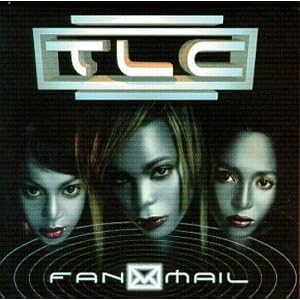
TLC - Fanmail

This is probably the most embarrassing album on this list, but whatever. I owned it in seventh grade. Up until Fanmail I had only listened to CCM artists (dc Talk, Newsboys, M.W. Smith, etc), and where Fanmail differed the most from those discs was the issues that it addressed. The Newsboys sang about how to stand up for your faith; TLC sang about how to deal with a society who didn't like you. I went to a Christian school and didn’t have to worry about defending my faith, but as tween I did have to worry about fitting in. I liked how relatable secular music was. I couldn’t get enough, and all the CDs I bought after Fanmail (which was a gift from a girl in my class, by the way. I didn’t buy it.) were secular. This disc laid the foundation for the type of music that I wanted to listen to.

Stand-out Tracks: “No Scrubs,” “Unpretty,” “Dear Lie”
Subsequent Artists: Green Day, Offspring, Eminem, Smash Mouth


Creed - Human Clay

While Fanmail may have laid the foundation, this is record that shaped the direction of my musical taste. Growling vocals, guitar solos, aggression, the works. Because it was Creed none of it was any good, but that doesn’t matter when you’re 13 or 14.  My appreciation for music has hopefully developed way beyond its humble beginnings, but I still think that my gut reaction to music will be driven by how similar it is to Creed. Human Clay received such heavy rotation (Weathered and My Own Prison less so) that the disc no longer plays. The song “Higher,” in particular, set the standard for what I thought was good music. Crunching riffs, clear vocals, tension-building bridge leading into ripping guitar solo - it was all there. (True to the charges leveled against Creed for being formulaic, “Stand Here With Me” off of Weathered did all of this in the exact same way, but better). Bands that I listen to now can be traced back to Creed in one way or another. Take Devin Townsend for example. I just bought his latest record, Epicloud. I can trace him back to Steve Vai, who I can trace to David Lee Roth, back to Van Halen, to Guns n’ Roses, to Jet, to Alien Ant Farm, to Seether, to Lifehouse, to Creed. I can do analysis like that for most of my current record collection.

Stand-out Tracks: “What If,” “Beautiful,” “Higher,” “With Arms Wide Open”
Subsequent Artists: Nickelback, 12 Stones, Evanescence, 3 Doors Down, Fuel, Default, Seether, Finger Eleven, P.O.D., Chevelle


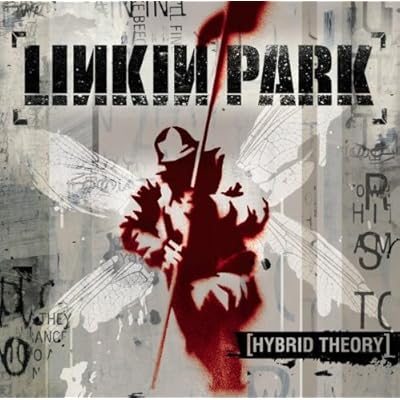
Linkin Park - Hybrid Theory

I remember exactly where I was when I first heard this album: I was on a shinkansen (a bullet train) on the way to Tokyo from Kyoto, listening to a friend’s MD player. This was the spring of my eighth grade year, when MDs were still useful. Linkin Park literally blew me away; it was nothing like anything I had heard before. It was fast, aggressive, and energizing. It was rap. It was rock. And you could sing along to it. All the bands I was listening to at the time- Creed, Kid Rock, Limp Bizkit, Papa Roach, P.O.D., U2 - didn’t even come close to capturing the excitement that Hybrid Theory brought to my middle school life. I could yell, spit rhymes, headbang, air guitar, DJ scratch, all at the same time! The amazing thing is that I never owned this album, even to this day, yet I can still sing along word-for-word with the whole thing.

Stand-out Tracks: “Papercut,” “With You,” “Crawling,” “In The End”
Subsequent Artists: Puddle of Mudd, Trapt, Drowning Pool, Alien Ant Farm, Incubus, Deftones, Breaking Benjamin


Weezer - The Green Album

I liked this album because a popular girl liked it. There, I said it. She was fun and sporty and two years older than me and liked Weezer. So, as a high school freshman, I decided to like Weezer. And I still like Weezer. Weezer pulled out a relaxed and fun side of me that Linkin Park suppressed. They wanted to spend all day at the beach and surf and complain that relationships with popular girls never worked out. (OMG, that was so true!) The difference with Weezer was that listening to them actually made you want to care about the issues that Rivers was dealing with. I was sad with him, anxious with him, joyous with him, and tortured with him. Life was tough when you listened to Weezer, but if things ever got too tough, you could always put on your Weezer t-shirt that read “If it’s too loud, turn it down,” and get on with your day. I listened to this album pretty regularly in my early high school years, except for that one time I stopped because I was dating a girl. All Weezer ever sang about was breaking up, and I didn’t need all that negative noise. But then she dumped me over the phone, and I went back to blasting “Island in the Sun.”

Stand-out Tracks: “Photograph,” “Smile,” “Island in the Sun” (“Hashpipe” sucks, yo.)
Subsequent Artists: White Stripes, Modest Mouse, Jimmy Eat World, Good Charlotte, Cake, Goo Goo Dolls


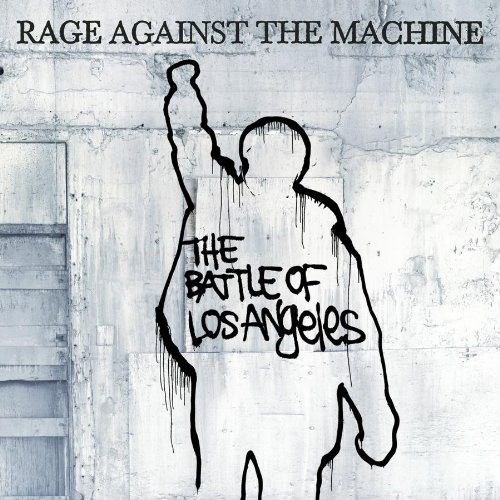
Rage Against the Machine - Battle of Los Angeles

This CD defined my existence for two years, and now I can barely stand it. The angst and rage present in Hybrid Theory was here, not only tenfold, but also in a way that made me want to care about what Zack & Co. were angry about. Linkin Park were mad, sure, but I didn’t really know why. Rage talked about politics, economics, poverty, and other important stuff that high school sophomores with a lot of emotion and energy want to want to care about. While others in school were still caring about being popular, as I had in my TLC phase, I had “graduated” into caring about “real” issues. I can only imagine how my supercilious attitude must have come off. “Oh, you didn’t get elected to that student council position? Well, the EZLN rebels fighting for their freedom in Mexico are dying as America doesn’t care, so I’m gonna go put up their poster in my locker. Later.” I was a real prick. BUT ANYWAY, for the better part of two years Rage was the primary band that I listened to. Part of the appeal was Morello’s guitar work. I was a fan of good guitar playing (well, good in the “loud and fast” sense) ever since listening to Mark Tremonti from Creed solo away on “Higher,” but Morello was more interesting. He took what the guitar was capable of into left field and stayed there. Add that Tim the bassist was crazy and Zack “spit non-fiction” about real issues, and I was hooked. I want to say that I eventually matured out of this record, but I didn’t. I became a Christian - that’s really what pulled me out of it. I was talking to a youth pastor named Dave and he told me something about anger that I’ll never forget. “Dann,” he said, “you need to watch out to avoid anger. A lot of Christian parents warn against AC/DC or Judas Priest or whatever, but those guys don’t bother me because I don’t think they’re very serious. But Rage, man, they are actually angry. And if you feed on that, it will destroy you.” So for a while I worked hard to be more careful. And then a Christian thing called “sanctification” happened, and my entertainment tastes changed because God was at work within me. Now anytime a Rage song comes on, it’s hard for me to listen to it because I’m not that person who used to enjoy it anymore. I’m different.

Stand-out Tracks: “Guerilla Radio,” “Calm Like a Bomb,” “Sleep Now In the Fire,” “War Within a Breath”
Subsequent Artists: Porno for Pyros, Soundgarden, Living Color, Sevendust, Jane’s Addiction


Guns N’ Roses - Greatest Hits

Throughout most of high school my goal was to be kind of a rebel. That didn’t work too well, because it turned out that I was too introverted to be rebellious. Being a rebel was also a full-time job, but I didn’t have enough to be angry about to make it a lifestyle, and I didn’t have the energy to keep up a front 24/7. Guns N’ Roses changed all that, because Axl taught me that you don’t need to be rebellious all the time if you can manage to be stupidly irreverent some of the time. I started listening to classic rock my junior year of high school, and the summer between junior and senior year I borrowed this CD from a guy named Jay. And that was my summer. “Patience” followed by “Paradise City,” “Civil War,” and “You Could Be Mine.” Rock out and repeat. Summer ended and I was still rocking. For the next four months, I wanted to be Axl Rose. I wanted to tour the world, wear ridiculous clothes, and trash talk rock critics. I wanted to gyrate around micstands, call Cobain a loser, and date crazy women named Michelle. Looking back on it now makes it seem all very funny and childish, but I was serious. When I was 17, I wanted to be Axl. Their Greatest Hits should have been a double disc. 

Stand-out Tracks: “Patience,” “Paradise City,” “Sweet Child Of Mine”
Subsequent Artists: AC/DC, Van Halen, KISS, Led Zeppelin, Motley Crue, Def Leppard, Aerosmith, Hanoi Rocks, Poison, Scorpions, Velvet Revolver


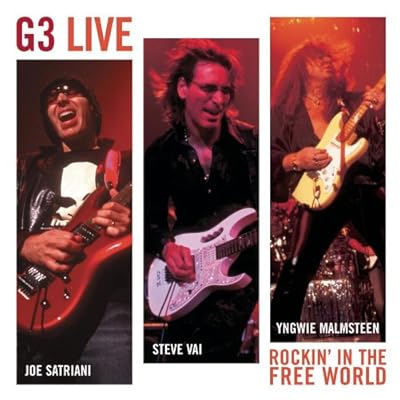
G3 Live - Rockin’ in the Free World

I bought this CD on a trip to Thailand in the spring of 2005, as part of the logical progression of my exploration of the “influencers” of modern rock bands. Up until this time it had been mostly alternative rock with a smattering of classic rock, but late in 2004 I started on the “influencer” kick. I felt I knew what bands I liked, and respected the musicians who were part of them. I also knew that those musicians were influenced by bands before them, and that musicians I looked up to had musicians they looked up to. And so I traced modern bands back to classic bands, and classic bands back to Hendrix. But I soon found out that I didn’t like Hendrix. So I traced Hendrix forward, and got to virtuoso guitar players - particularly Steve Vai. Vai had all the talent you could want combined with the panache of Axl Rose. What could be better?, I said, and so I bought this album. The three guitarists on this record took me by storm. Malmsteen’s “Trilogy Suite Op.5” was the greatest piece of music I had ever heard. My hierarchy of guitarists was quickly rearranged to put him at the top, followed by Vai, Van Halen, Slash, Page, Morello, Angus Young, Kim Thayil, Satriani, and so on and so forth. I had always liked guitar work, but this album turned the key into a whole new world of guitar work. I had a lot of disposable income in the months following this purchase, and a lot of it was spent on instrumental guitar albums. That has stayed reasonably constant over the last seven years, to the point where a whole shelf of my CD rack is dedicated to such records.

Stand-out Tracks: “Crystal Planet,” “Whispering a Prayer,” “Trilogy Suite Op. 5”
Subsequent Artists: Steve Vai, Yngwie Malmsteen, Joe Satriani, Paul Gilbert, Jason Becker, Marty Friedman, Eric Johnson, Buckethead


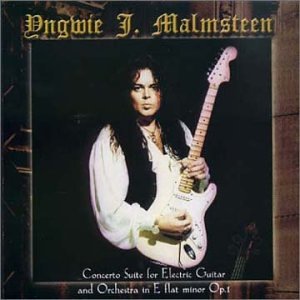
Yngwie Malmsteen - Concerto for the Electric Guitar

My list includes this record not because of anything innovative it did, but rather because it showed how poorly integrated classical and rock music does no one any favors. My parents are classical music buffs and I was exposed to a lot of it growing up, but I never liked it. It was always “Mommy and Daddy’s boring music” and ipso facto inferior to anything else that I was listening to. This was never more true than in high school when I was immersed in rock music; the only classical instruments I wanted to hear were strings on an Evanescence record or an organ in a Doors’ track (barely a classical instrument, I know). But as I said above, alternative rock led to to classic rock, which led me to Hendrix, which led me to virtuoso guitarists. Just like, I think, most people freshly exposed to virtuoso guitar, I took an immediate liking to Malmsteen. His speed and technical ability were incredible, and when one has yet to learn about things like harmony, phrasing, tone, fuzz, and other fun stuff like that, technical prowess is all that matters. After I had chewed through a few of his solo albums that he released in the '80s, I had to get this album, because it combined blistering fast guitar with all the “epicness” of playing with an orchestra. I was 19 at the time and very into “epicness.” Rather than epicness, however, I found disappointment lurking in every track. My childhood exposure to classical music had taken its toll, and I found that I was used to much more lush, complex, and interesting orchestral arrangements then what Yngwie offered. Just watch this and tell me that it’s not absolutely terrible. It makes both the electric guitar and the orchestra look bad. The guitar part looks childishly simple, and the orchestra looks bored. Neither instrument is playing to its strength. And so, with that, this record cemented in my mind a clear separation between rock and classical orchestral music. By seeing orchestras used poorly, I gained an appreciation for the good classical music that I had grown up with, and so went out and bought a lot of classical CDs. By seeing Yngwie perform without bass support, I realized that bass support is really crucial to making a good rock band, and I gained an appreciation for good bass work on rock records (none of which shows up in any of Yngwie’s catalog). Rock stayed rock, and classical stayed classical.

Stand-out Tracks: All are equally bland
Subsequent Artists: Paganini in particular, and an increased appreciation for classical music in general.


Klaus Schulze - En=Trance

See that picture? The one of the guy opening the door to the electromagnetic spectrum? That got me to buy this album. I knew nothing of Klaus Schulze, nothing of kraut-rock, nothing of sequencers, mindscapes, patches, or textures. But I liked that picture and was attracted to an album composed of four tracks of 17-minutes each, so I bought it off eBay and waited for it to arrive. It showed up postmarked from Russia, the product of an illegal pirating operation. Oops. I have never listened to a legitimate copy, so I don’t know if the quality is equal to the original, but it did its job before the poorly-pressed disc disintegrated. I honestly didn’t know what to think as I listened to it the first time. I had never heard synthesizer music, but knew that it was "different" and that I liked it. As I grew to like it more and more, I noticed that my appreciation for cohesive album experiences grew. Up until this time I had listened to rock singles and "greatest hit" and such, but it was rare for me to listen to albums start to finish without skipping a track I didn’t like. En=Trance didn’t have any tracks I didn’t like. A side effect of this was the change from music being background noise to music as an active experience. I began to sit down for an hour and concentrate on just listening to music. This album was rich enough and interesting enough to make me do that. Another change I noticed was that I liked classical music more as a result of hearing Klaus Schulze. Both are what music critics call “long-form” music - music that takes a while to develop an idea and makes you stick with it through boring moments and exciting moments because it wants to actually take you somewhere. It presents a journey for you to take rather than a chorus to headbang to. A common complaint leveraged against classical is that it it boring, and therefore not worth listening to. This, I think, has less to do with the merits of classical music (though some is quite tedious, cc: Mahler), and more to do with a misunderstanding of short form vs long form music. They aim to accomplish different things. Klaus and his synthesizers accomplished wonderful things.

Stand-out Tracks: The whole album, all four tracks.
Subsequent Artists: Jean-Michel Jarre, Peter Namlook, Adam Freeland, Brian Eno, Tangerine Dream, Aphex Twin
Fun Activity: Say "in-depth synthesizer" ten times fast.


Devin Townsend - Infinity

I bought this record because I liked Devin’s vocals on Steve Vai’s Sex and Religion record, but nothing could have prepared me for the sonic assault that “Infinity” threw at me. It was like Hybrid Theory, but it was also like Metallica, but it was also sensitive, and above all, it was spine-crushingly insane. I sat there with my headphones on, mouth agape, thinking “what on earth is entering my brain??” Sex and Religion was overall pretty terrible; this was brilliant and terrifying, engaging and overwhelming, precise yet chaotic. To this day nothing has matched it. By the end of the first four tracks, which comprise a seamless start to the album, my heart rate had risen by at least 15 beats/min. I needed to press “pause” and take a few deep breaths! Townsend uses a “wall of sound” technique in which layer after layer of instrumentation is woven together, on top of which the melody is laid. Most rock music is made with just your normal instruments: vocals, guitar, bass, maybe some synth, and drums. The backdrop to all of this is silence. On Infinity, the backdrop is more noise. Ancient people had this idea of the “music of the spheres,” the idea that there is cosmic music always playing that we are unaware of, and if it ever stopped, time and space would unravel and humans would be thrown off balance, terrified. Infinity touches on that. When the album reaches a point where noise actually stops, you can’t breathe. At first the noise seems raucous, but then it becomes natural, and then you realize that you feel lost without it. It’s hard to explain. Just listen to it. This album, in a way, even influenced my education. It was recorded just after Devin was diagnosed as bi-polar, and so represents him, literally, at the height of his insanity. Listening to it made me want to understand how his mind works - how any “different” mind works. And so I started studying psychology in college, watching psy/thriller films, and reading books about LSD and near-death experiences. All that to say that I still haven’t figured out what is going on in the album, and it takes me for a trip with every listen.

Stand-out Tracks: “Christeen”, “Bad Devil,” “Colonial Boy,” “Dynamics”
Subsequent Artists: None, because Devin stands on his own. I now have four more of Devin’s records. Go listen to Epicloud.


_DZ submit to reddit

7.11.2012

Coats in Summer and Proper Use


“Attention Goodwill shoppers,” flowed the voice over the loudspeaker, “today is dollar-forty-nine day. All items with a green tag are just $1.49. That’s right, all items with a green tag are just $1.49. Thank you for shopping at Goodwill, where we’re more than just a store - we equip people to work.”

My fingers flitted through the rack of coats, my eyes scanning labels as I walked down the coat rack. Beige. Beige. Too small. Women’s. Too small. Too cheaply made. Ugh, red. Ooh, leather - too small though. This looks nice! I lighted on a huge woolen overcoat with “London Fog” on the label. I pulled it off the rack and tried it on. Too big. The arms were the right length, but you could have fit another of my torso inside. What rotten luck it was sometimes to be tall and skinny. I replaced it among the other coats and continued making my way towards the end of the aisle. I passed a couple more. Here’s another wool coat - a possibility! The tag read “Stafford.” I think I have a sportcoat made by them - it was nice. Let’s see how this one fits. I pulled it around myself, looking a tad ridiculous as I stood there in the middle of store in July, trying on woolen coats. The sleeves fit, the length of the coat looked right, and there was just enough space for my torso to be comfortable covered. I looked at the tag. Green! Looks like I found the deal of the day. 

“You find anything?” asked a voice to my left. I turned to see an middle-aged man, maybe early fifties, staring at me through a pair of glasses mounted low on his nose. He was wearing a green polo shirt and khaki shorts, and the scruffy beard on his face complimented by his socks-and-sandals clad feet reminded me a bit of my father. “Yeah, this right here,” I said, holding my arms out to better show him the coat that I was still hidden in. “One-hundred percent wool, and just a dollar-forty-nine!” 

“Can’t beat that!” he said, and I nodded in agreement. “This is the best time to buy coats, because no one else is looking.”

“That’s right!” he agreed.

“How ‘bout you? Find anything?”

He shrugged and held up a long beige coat. “Got this here, but there’s no label on it so it’s useless to me. It’s nice, though. 100% wool.”

“Really?” I asked as I stepped towards him. He handed me the coat to look at. Sure enough, it was wool. Really well-made, too. Heavy. But without a label, any potential customer would be skeptical that it really was a nice coat, or that it wasn’t stolen. Such skepticism is problematic for flippers.

You see the flippers from time to time at the Goodwill or other thrift stores. Guys browsing the electronics or the golf clubs, looking for a name-brand stereo or putter to buy and flip. Women looking at the men’s dress clothes or the household knick-knacks on the off chance that they might find a shirt of a good cut or maybe some genuine silver utensils. Buy and sell, a little bit of money here, a bit there. There’s always something to be learned from these people.

“You can have first dibs on it if you want,“ said the Flipper, gesturing at the coat still in my hand. I took off my new-found pile of warmth and tried his coat on. Too short in the sleeves. Again. Besides, it was beige. Beige coats are a sign of the wealthy, of the richer upper class who either don’t have a lifestyle that puts them in positions where an overcoat can get dirty, or who have enough money that they don’t have to worry about replacing a coat even if it does. This violates what I call the “proper use” of an item. God made fabrics and materials, and humans figured out that if those materials were combined and stitched a certain way, they would keep one warm. The primary purpose of a coat then is to keep one warm and dry and clean. Wool does all of those things (which is why I seek it out), and wearing a darker color allows the coat to fulfill its function longer, because the dirt doesn’t show. Using an item until it is finally worn out is a wise financial decision; here proper use and financial prudence dovetail nicely together. The only reasons a coat need be beige is because of style, which is ephemeral, or to broadcast one’s actual wealth, or to make oneself appear to be wealthy and in possession of “good taste.” Since I care little for style and am not wealthy, nor do I want to pretend to be, I have no interest in beige coats. “It doesn’t work for me, thanks though.” I handed the coat back.

I continued my search down the coat rack, nearing the end. Ah! Another well-made coat - one he could flip, perhaps. “Here’s a nice one,” I said, holding up a darker woolen Hugo Boss. Surely the German name would impress him. Instead I was met with a “What’s that? Is that a good one?” So this man isn’t just a flipper - he’s an ill-educated flipper.

Brands are a funny thing. They signify quality, but only to a certain extent. There is a very fine line between when a brand means “well made” and when it only means “trendy, so we can charge more.” Browsing Goodwill over the years has taught me a lot about quality - about things that are waterproof, windproof, warm, airy, breathable or not. NorthFace, for example, is one of those brands that is an automatic buy for me. It doesn’t matter if the item fits me or not, because it is guaranteed well-made. A well-made item is useful for somebody, and even if I can’t use it I can at least have the satisfaction of giving a high-quaity item away to someone else. NorthFace is (normally) expensive, and rightly so - it delivers on what it claims. Making extreme cold-weather gear or a windbreaker that is waterproof/breathable is hard, and to do it well justifies the cost. This is part of proper use. Things that accomplish their goals well should be honored and used. And, for Christians, Jesus commands us to be generous with our belongings. To both invest in proper use and to pass it on, I feel, honors Jesus. Because of this I have tried to make a habit out of anticipating being generous. If I find nice things at good prices, I buy them in the hopes that they will be useful to someone somewhere down the line. But as I stood there in front of the coats, it seemed that Flipper was unaware of proper use.

This brought all sorts of existential questions crashing down on me, one after another like a rack of coats breaking free of their hangers and burying me under a pile on the floor. What did this guy do? Was he successful? Where had he been in his life that brought him, here and now, to the middle of a Goodwill in Minnesota, staring at a rack of coats trying to figure out which ones he could buy and make a profit on. Did he like wool? Leather? Polyester? Now the guy was talking something about cashmere. “Here, you feel that? That’s cashmere. That’s gotta be. That’s the stuff you really want. That’s the good stuff.” Did he know what he was talking about? Did a mid-life crisis push him into a place where his way out was to work to be an expert on fabrics? Was this just a fun hobby? Either way, it didn’t look like he wanted the Hugo Boss, and it was too big in the torso for me to consider. I looked at my $1.49 success story of the day as he wandered off through the jeans aisle. 

“Attention Good will shoppers. There is a car parked out front that needs to be moved. If you drive a blue Honda with license plate xxx-xxxx, please go move your car. Thank you.”
It wasn’t my car, but I figured it was time for me to go anyway.


_DZ submit to reddit